




The exhibition starts from a time when the people came to realize that they were the true owners of their country and pursued modernization, to today when the nation-state is being newly defined.
Let’s learn how Koreans pictured the future of their homeland and life in their troubled world.
Part 1 looks at the efforts to establish a modern nation and the setbacks, opposition against the Japanese imperialist occupation, and changes via new cultural and educational experiences.
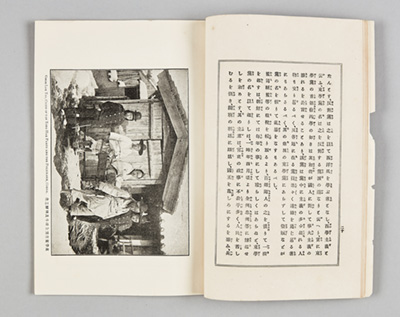 Japanese magazine with the photo of Jeon Bong-jun

A pictorial issued on May 10, 1895. The photos were taken by Murakami Tenshin before Jeon Bong-jun, an activist being interrogated by the Japanese Embassy in Korea, was transferred to the Ministry of Justice on February 27, 1895. Jeon is on a stretcher because his feet were severely injured. - Donated by Park Maeng-soo
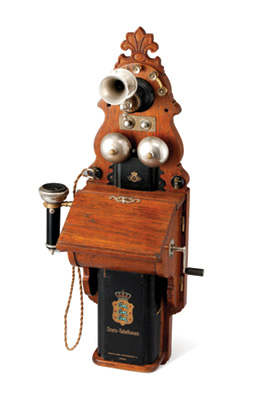 Ericsson Telephone
An electric telephone manufactured by Ericsson, a Swedish multinational telecommunications company. Turning the right handle rotated the generator inside and transmitted a signal to the telephone exchange. This is an identical model to what was first installed and used inside the Gungnaebu (Department of the Royal Household of the Joseon Dynasty) in the 1890s.
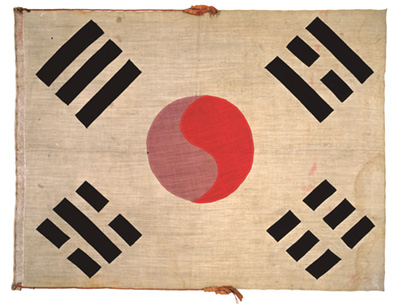 Taegeukgi (Korean national flag) of the Korea Provisional Legislative Assembly
Registered Cultural Heritage No. 395-1
A historic artifact owned by the family of Kim Bung-jun, made by hand by Kim's wife, Roh Yeong-jae. It is thought to have been used by the Provisional Government of the Republic of Korea and the Korean Provisional Legislative Assembly.
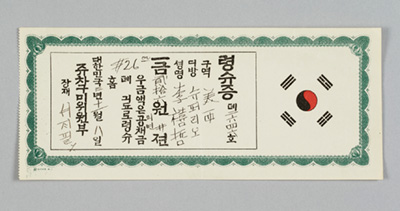 Receipt for contribution issued by the Provisional Government of the Republic of Korea
A receipt for contribution issued to Lee Hee-cheol in the name of Seo Jae-pil, a member of the Korean Commission to America and Europe. It contains information on regions, provinces, names, and other information, and totals 26 dollars. The part where it says "bond" has been corrected to "contribution" or donation.
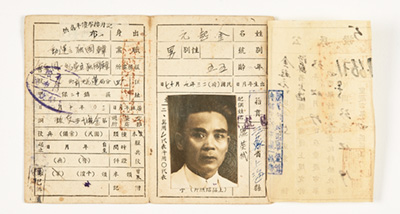 Kim Gi-won's, Roe Young-jae's and Kim Deok-mok's resident ID cards in Chongqing
Registered Cultural Heritage No. 550
An ID card issued in Chongqing, China. Kim Gi-won was another name used by Kim Bung-jun, who was Chairman of the Korean Provisional Legislative Assembly. For occupation, Kim filled in “Independence Activist.
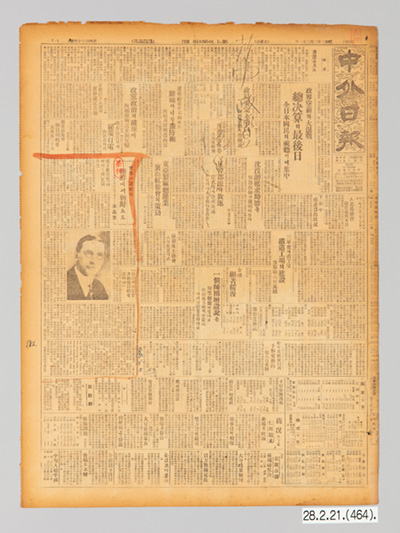 Jungoe Daily censored by Imperial Japan
The authorities censored articles published by newspaper companies before their publication, in accordance with the Newspaper Law in 1907. The censored copy is full of red marks.
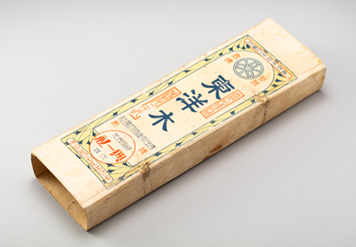 Dongyangmok wrapping paper
Dongyangmok is the product name for cotton cloth manufactured by Dongyang Yeomjik Co. The company was originally called Kim Deok-chang Yeomjik Gongso (Textile Company) and established in 1897 in Seoul. It was later reorganized and incorporated in 1919.
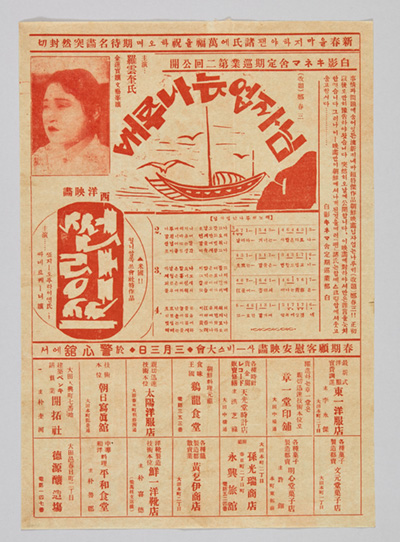 Ferry Boat Without an Owner
The Ferry Boat Without an Owner was a film starring Na Woon-gyu, which was praised at the time for hinting at the reality of the Korean people during the Japanese occupation. It is a tragic story about a man named Choon-sam who lives an unfortunate life that involves the railway, a product of the modern period.
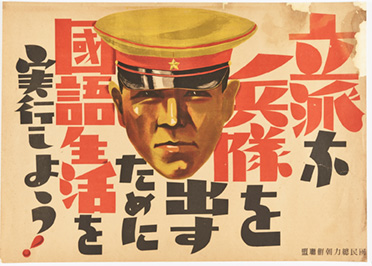 Poster encouraging the use of the Japanese language
This states that Japanese must be used daily to become a great soldier. The conscription system was strongly related to the use and spread of the Japanese language, so this can be interpreted as part of Japan's plans to expand the use of Japanese in Korean society.
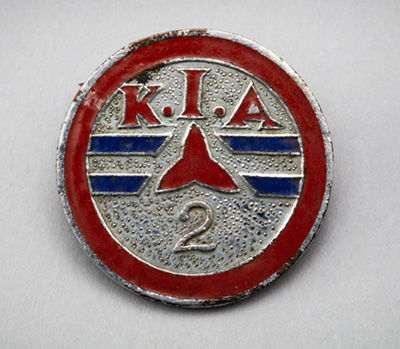 Badge of the Second Detachment of the Korean Independence Army
A badge of the Second Detachment of the Korean Independence Army organized in Chongqing, China, in 1940. K.I.A stands for the Korea Independence Army. The number refers to the Second Detachment.
Part 2 shares stories about foundation of a government after liberation from Japanese occupation, and the Korean War. It also looks at the people who never lost hope and continued striving for a democratic society and the ability to make a decent living.
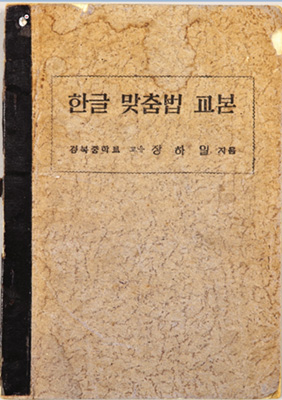 Hangul Spelling Textbook
The Hangul textbook published and used by Jang Ha-il, who taught at Kyungbok Middle School. Due to the shortage of textbooks written in Korean right after liberation, schools and teachers participated in the publication of their own textbooks. - Donated by Chang Han-nim
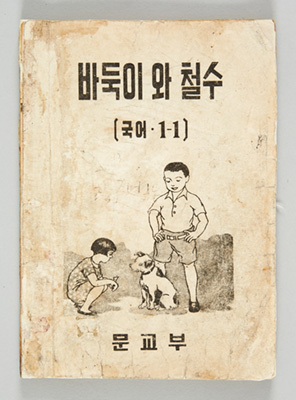 Badugi and Cheolsu (The First Korean Textbook)
The first Korean textbook for the first year of elementary school to be published by the Ministry of Education after foundation of the government. Each chapter consists of short stories of Cheolsu's friends and family, which later formed a single piece together.
 Good Luck wishes on the Taegeukgi
A Taegeukgi with phrases written on it longing for soldiers' good luck in war. It includes messages such as "Good luck in war," "Military heroes of the Republic of Korea at the front," and "We soldiers shall fight for the lives of 30 million."
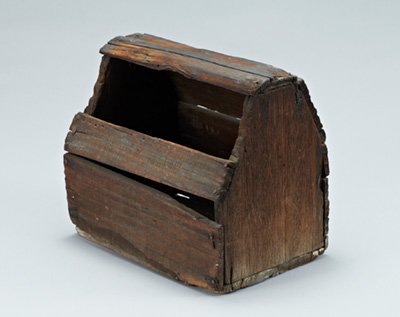 Shoeshiner’s box
The donor, who was in elementary school during the Korean War, worked as a shoeshine boy on behalf of his father, who went missing, to support his mother and four siblings. The shoeshine's box was made from an apple box. Many children polished people's shoes or sold cigarettes from a stall for a living. The kids also collected (to sell) chocolate given to them by members of the US armed forces. - Donated by Hwang In-deok
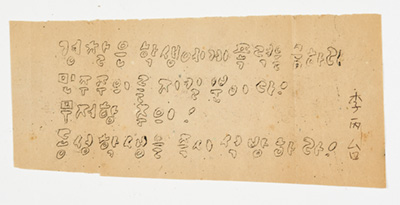 Flyer from the April 19 Revolution
A flyer that the donor, who was then a senior at Dongsung High School, made himself for the April 19 Revolution using the school's copying press. It demands that the police release fellow students taken to the station for participation in the demonstration. - Donated by Lee Byeong-tae
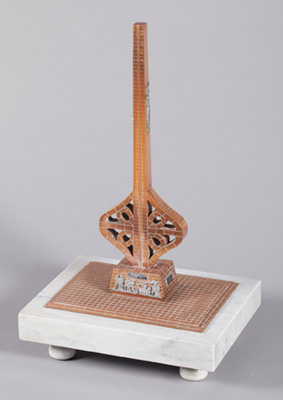 Miniature of the Memorial Tower of those killed during the construction of the Seoul-Busan Expressway
A miniature of the memorial tower built to honor the 77 people who died during construction of the Seoul-Busan Expressway. The donor was the Minister of Works and Infrastructure at the time. - Donated by Lee Han-lim
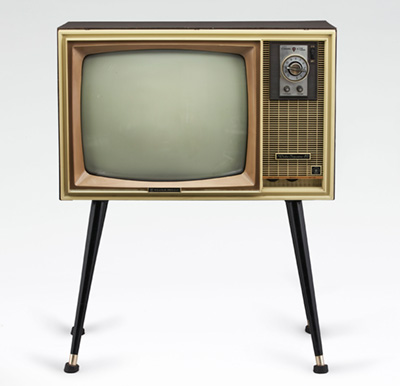 Korea's first television Goldstar VD-191
The first domestic-made black-and-white television released by Goldstar in 1966. Despite its high price, which equaled the annual salary of a factory worker, these TVs were in high demand and were sold through an open lottery system at the time.
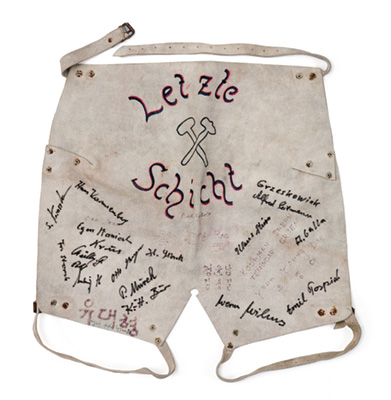 Hip protector
The donor left his wife and three children and flew to Germany in 1976 in order to settle their financial troubles. While working as a miner for seven years, he wore this backside protector whenever there was a slanted rock area he had to slide down. A German phrase translated as "the last work crew" has been written on it, as well as the signatures of his fellow miners. - Donated by Kim Gwang-se
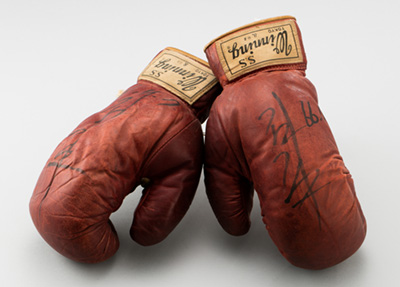 Glove of Kim Gi-soo, first world champion boxer of Korea
Kim Ki-soo, a professional boxer, became South Korea's first world boxing champion, defeating the previous world champion, Nino Benvenuti, at Jangchung Municipal Stadium in 1966. Korea's world boxing championship was continued by Hong Soo-hwan, Yuh Je-doo, and Yum Dong-kyun. - Donated by the Kim Ki-soo Association
 Free Press Declaration of 1974
A scroll made with some wallpaper from the editorial department when about 180 Dong-A Ilbo journalists made their Free Press Declaration to oppose suppression of the press by the Yushin government (Fourth Republic of South Korea) on October 24, 1974. The scroll was relocated to a provisional office for the Dong-A Committee for Free Press, a group formed by dismissed reporters. - Donated by the Dong-A Committee for Free Press
Part 3 is on the establishment of democracy after the June Democracy Movement of 1987, changes in South-North relations on the peninsula after detente and globalization, and stories about changes to life with the emergence of the connected society.
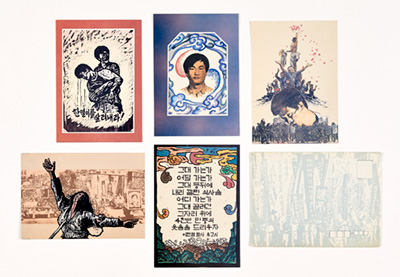 Postcard in memory of the late Lee Han-yeol
A postcard set commemorating the late Lee Han-yeol, issued by the Lee Han Yeol Memorial Museum. - Donated by Kim Seon-mi
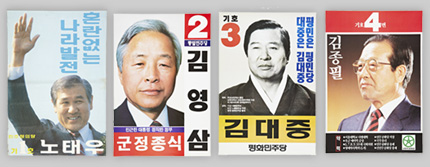 Campaign poster for presidential candidate
Campaign posters for the candidates running for the 13th president in 1987
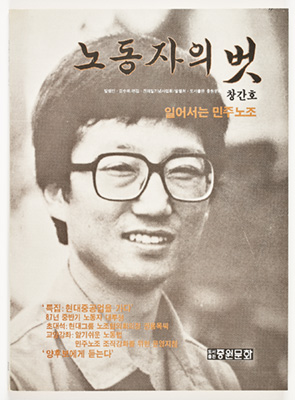 Friends of Workers
The first issue of Friends of Workers, a cultural magazine for workers, published in 1987. It includes labor movement trends and discussions on settlement of the democratic labor union.
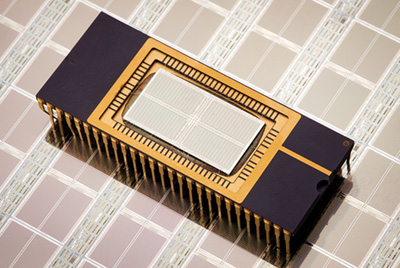 The world’s first 64MB DRAM
The world's first 64MB DRAM semiconductor memory chip developed in Korea. Primary research and a joint development project by the government and a private research institute in 1989 resulted in production of the first such memory chip in the world in 1992, by the development team of Samsung Electronics. Up to 4 million Korean characters could be stored inside a chip the size of a person's fingernail. - Samsung Electronics
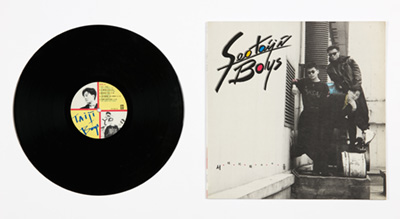 Seotaji and Boys, First album
The new generation in the 1990s, who pursued freedom rather than authority and sought to think outside the box, fell in love with a new type of popular music. Starting from Seotaiji and Boys, singers and bands such as Kim Gun-mo and Roo'ra gained popularity, which gave Korean pop music its glory days, producing new albums day after day.
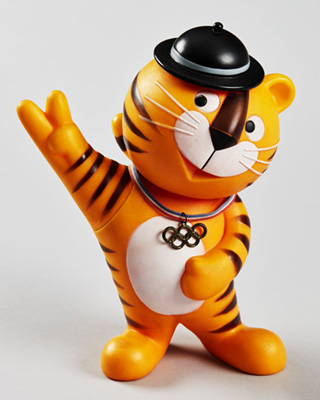 HODORI, Mascot of the 1988 Summer Olympic Games in Seoul
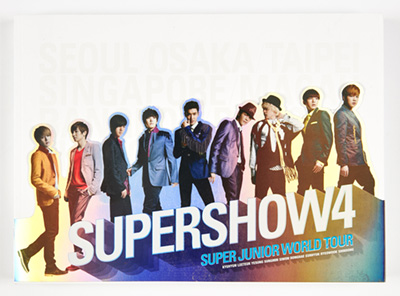 SUPER JUNIOR World tour concert photobook
The world concert tour by the Korean boyband, Super Junior, and titled SUPER SHOW, is representative of the Korean Wave. Their hit song, Sorry Sorry, was top of the charts for 121 weeks in Taiwan—a testament to their popularity in Asia. This led to their performing during the closing ceremony of Jakarta Palembang 2018 Asian Games.
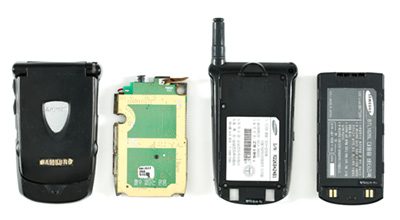 Mobile phone with inscription, “You can do it”
A folding mobile phone manufactured in 1999, which became a breakthrough for export during the foreign currency crisis. The message, "You can do it" was inscribed on the substrate inside the phone as an inspiration to overcome the crisis and for success of the product.
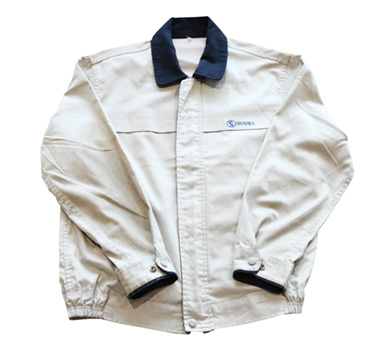 North Korean workers’ uniform in the Gaeseong Industrial Complex
A uniform worn by North Korean workers in the Gaeseong Industrial Complex and supplied by the first company to register a corporation by investing in the complex. Gaeseong Industrial District Foundation
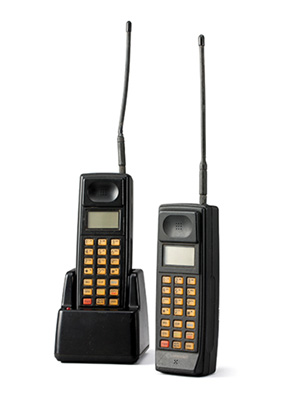 Samsung SH-100
The first domestic-made mobile phone, nicknamed "brick" because of its thick, rectangular shape.
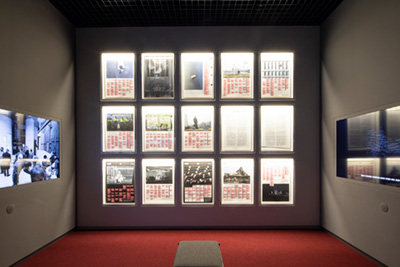
Touchscreen kiosks have been installed for visitors to access documents, photographs, digital audio, oral image recordings and other parts of historical collections kept at the museum.
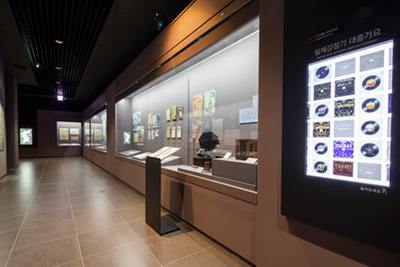
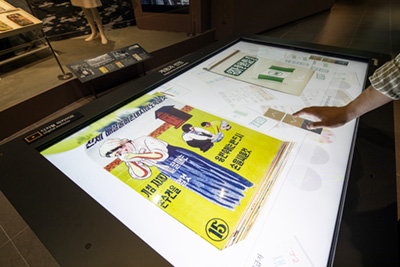
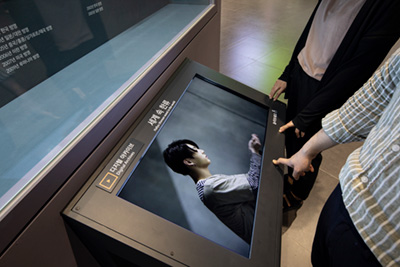
This section features booths for visitors to listen to stories told by different donors who lived through the liberation from Japanese occupation, the Korean War, the April 19 Revolution, and the May 16 Military Coup, and stories about people who participated in the Saemaeul (New Village) Movement, those who spent their lives as miners and nurses dispatched to Germany, as well as of workers, housewives, and students during the foreign currency crisis.
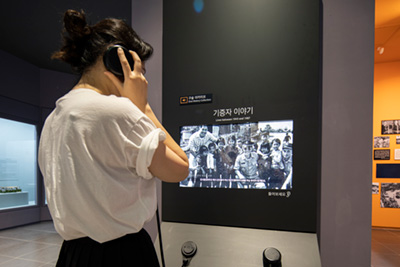
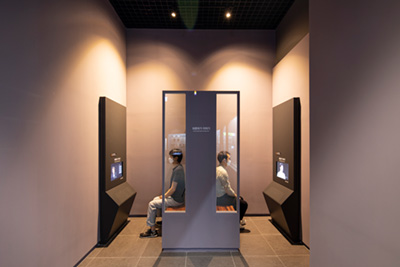
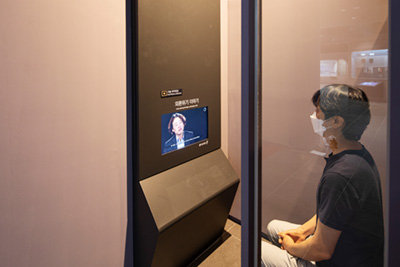
The design of this space differs from the rest of the museum, with a variety of media to create a unique ambience and a closer look at the lives of those who were part of contemporary history.
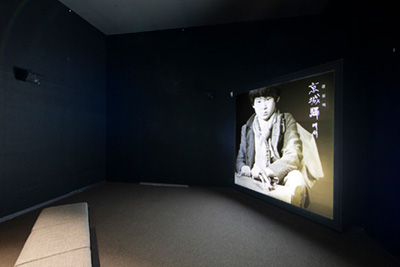
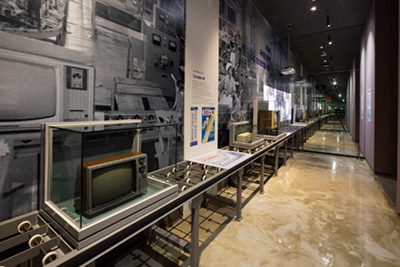
An animated film about a Busan resident who participated in the June Democracy Movement of 1987
National Museum of Korean Contemporary History
198 Sejong-daero, Jongno-gu, Seoul 03141, Korea | Tel +82-2-3703-9200 | Fax +82-2-3703-9216
Copyright © National Museum of Korean Contemporary History.All Right reserved
