
2025 Autumn Vol.78
━ First Exhibition ━
《Sounds of Liberation from Afar》
Partial Renovation of the History Gallery Commemorating the 80th Anniversary of Liberation
To mark the 80th anniversary of Korea’s liberation, the National Museum of Korean Contemporary History has created a new space in the History Gallery to reflect on that historic moment. Visitors can see materials related to the Voice of America’s Korean-language broadcast, which first delivered the news of liberation on the morning of August 15, 1945, as well as shortwave radio broadcasts by independence activists that kept hope alive among Koreans at home.
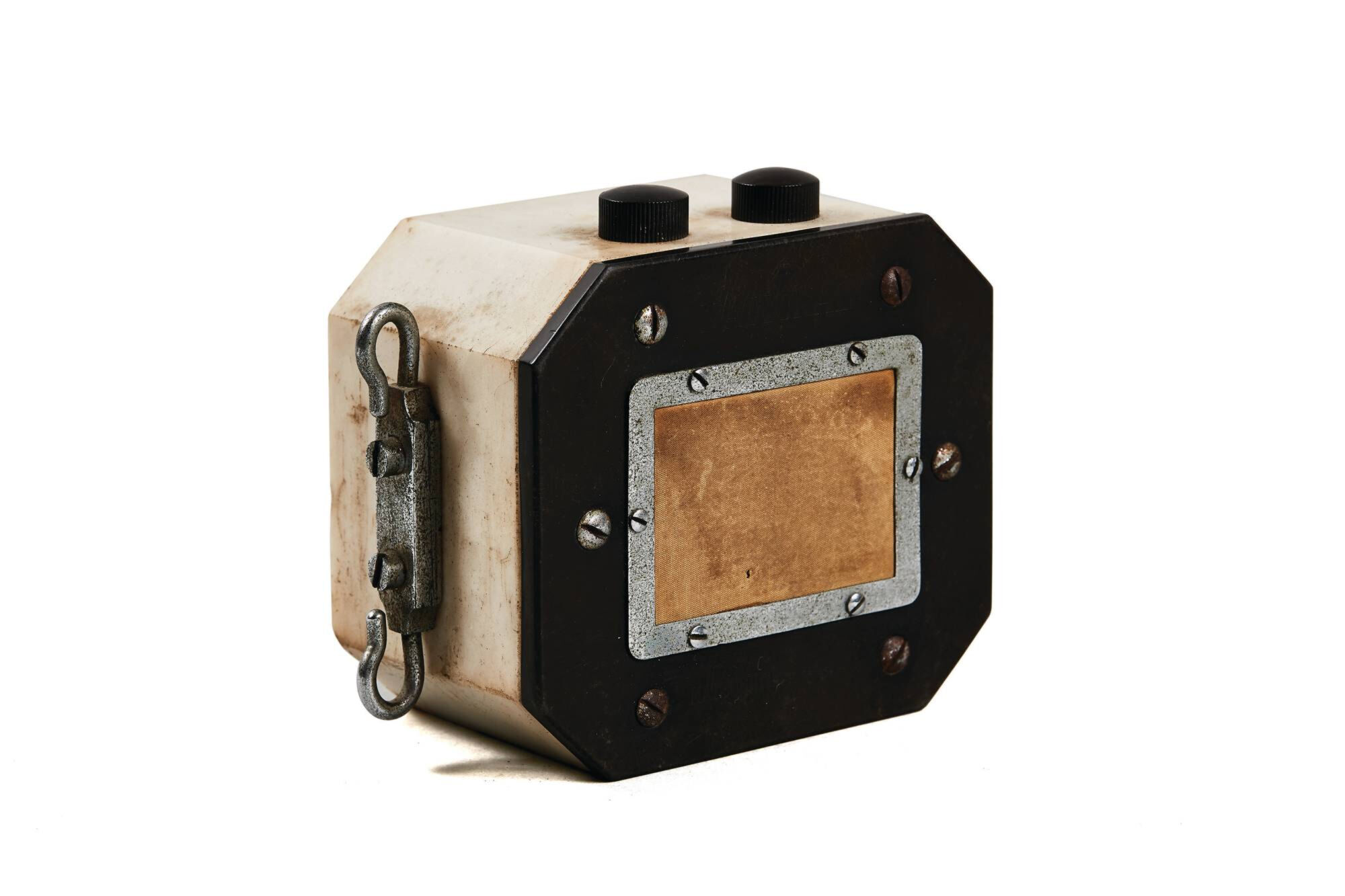 ▲ Microphone used for radio broadcasting during the Japanese colonial period. Collection of the National Museum of Korean Contemporary History.
Hope Delivered by Radio
The final space of Part 1 of the History Gallery, which covers the period from the Korean Empire through the Japanese colonial period, has been reborn as “Sounds of Liberation from Afar.” True to its name, this space focuses on radio broadcasts.
During the final years of Japanese rule, despite strict media control, independence activists abroad shared news of world affairs and the independence movement through shortwave radio broadcasts.¹⁾ Unlike newspapers or magazines, radio had no physical form and was transmitted in real time, so it could convey genuine war news that the Japanese had not censored.
The exhibition introduction features three newly presented materials related to radio during the Japanese colonial period. Among them, the “Radio Listening Permit” demonstrates how the Japanese continuously controlled and monitored radio listeners. To listen to the radio, one had to obtain permission from the Japanese Government-General of Korea and receive a permit with a unique identification number. Whether the receiver’s frequency fell within an appropriate range was also a significant consideration, and shortwave receivers capable of picking up overseas broadcasts were, in principle, prohibited.
Nevertheless, radio broadcasts by independence activists reached Korea and caused a big stir. The booklet “Litigation Records and Court Rulings on Cases of Clandestine Shortwave Listening,”²⁾ available in the exhibition hall, offers a glimpse into the circumstances of that time. People who secretly listened to shortwave broadcasts while evading Japanese surveillance spread the hopeful news by word of mouth: “Japan will ultimately be defeated, and Korea’s independence is not far off.” As the rumors grew, the Japanese authorities launched a massive investigation and arrested more than 350 people. The charges the Japanese applied to them were that they had listened to overseas shortwave broadcasts and spread “fabricated rumors”³⁾ related to the war.
1) Radio broadcasts are categorized by frequency band into shortwave, medium wave, and ultra-shortwave. Among these, shortwave broadcasts had a long transmission range and could carry sound over very long distances.
2)Listening in secret.
3)Creating and spreading groundless statements.
Charges
Violation of Army Criminal Law, Violation of Navy Criminal Law
Defendant
Lee Geun-chang (李根昌, Matsuyama Kokichi 松山高吉)
A public trial is requested regarding the criminal facts of the above defendant.
Criminal Facts
The defendant, as a technician in the maintenance division of the Korean Broadcasting Association’s business department, listened to subversive broadcasts transmitted from San Francisco, USA, through a radio receiver with a colleague from the maintenance division in early December 1942... In mid-December of the same month, he also spread rumors to colleagues, saying: “After listening to Korean rumor broadcasts from San Francisco, USA, the Allied forces of America and Britain have abundant supplies and superior weapons, so a protracted war favors them. The Allies are preparing to attack the Japanese mainland, so when the time comes, we Korean compatriots should help them achieve Korean independence.”
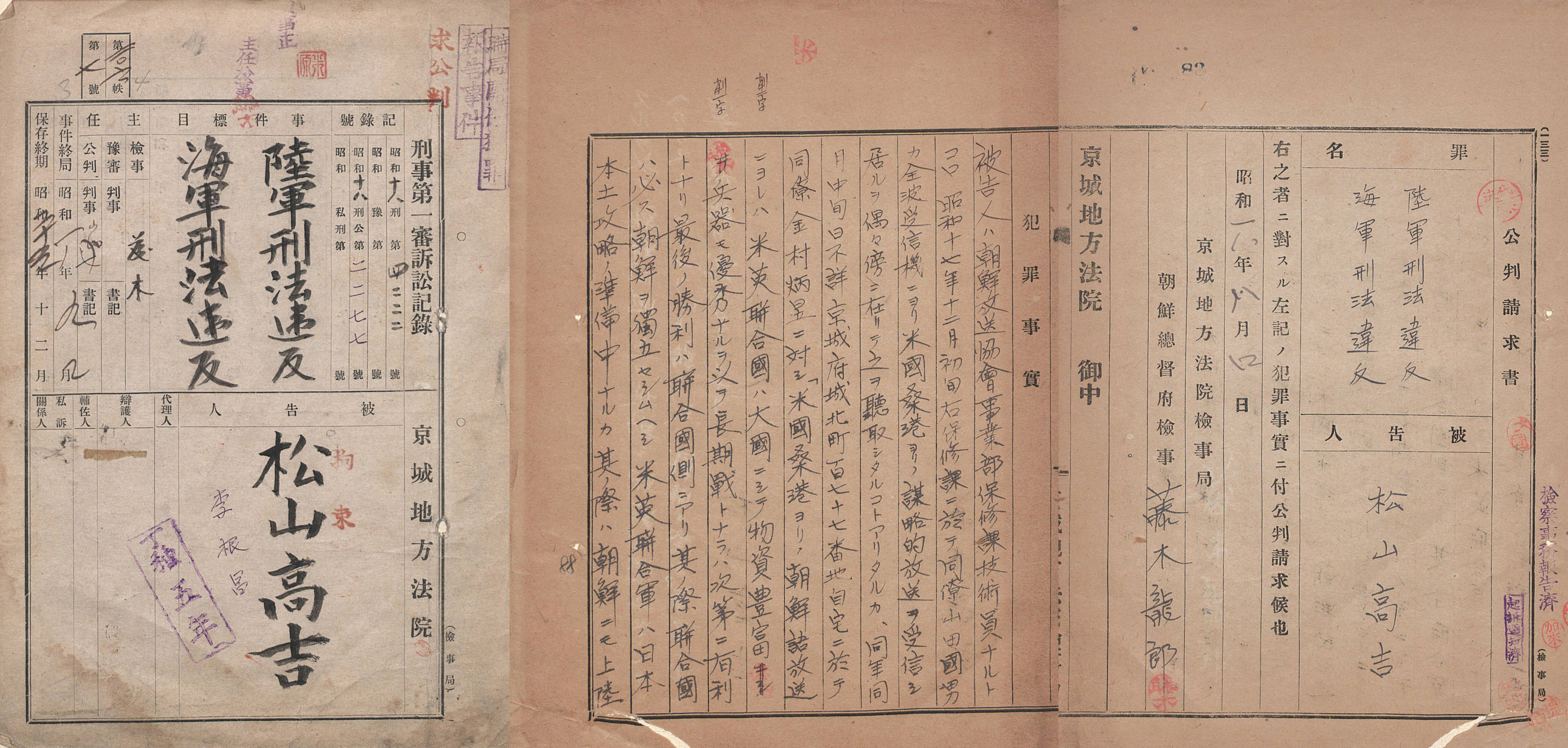 ▲ Cover of Lee Geun-chang’s litigation record and public trial request. Collection of the National Institute of Korean History.
News of Independence Sent to the Homeland
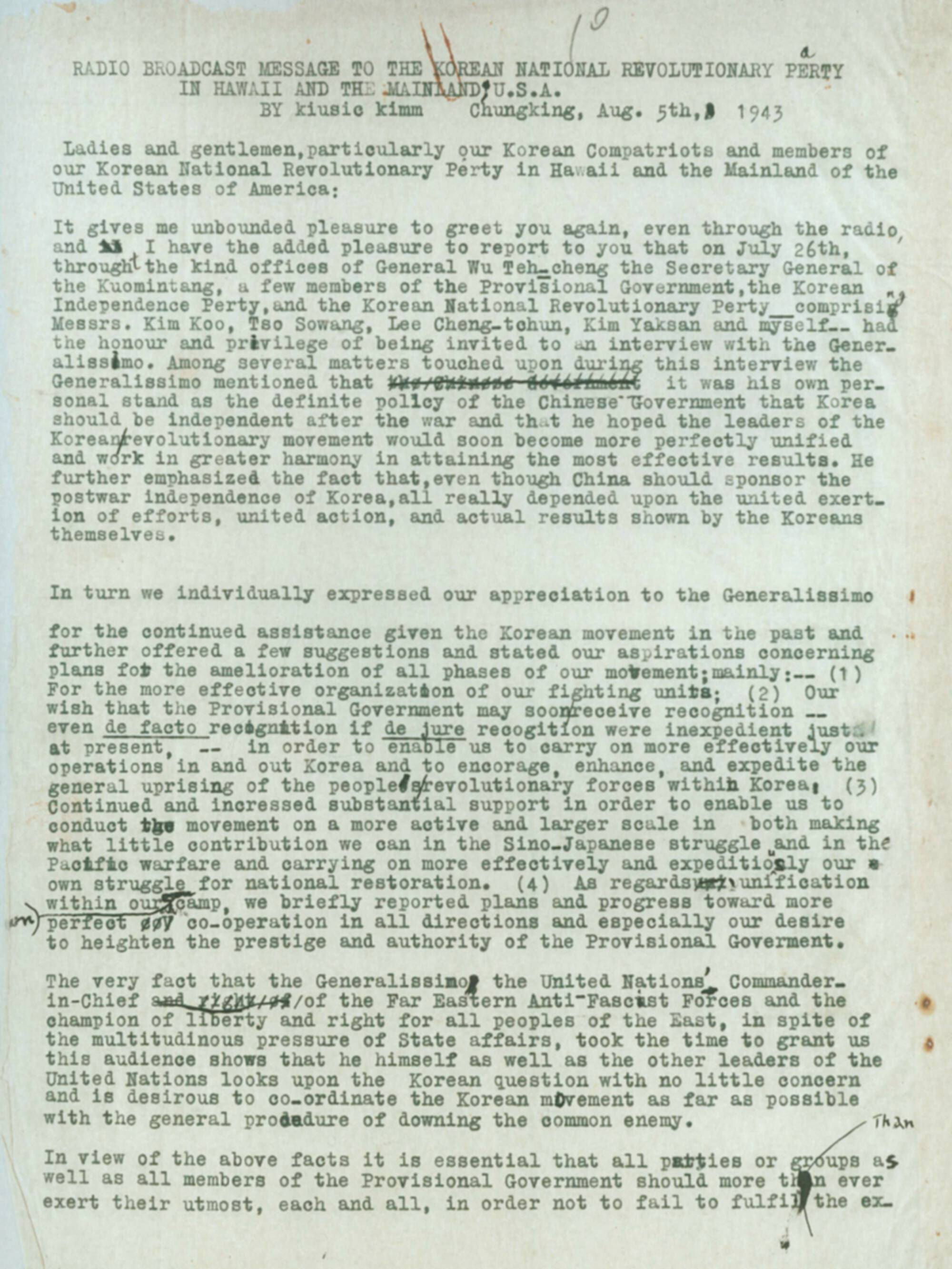 ▲ English manuscript of a radio broadcast by Director Kim Kyu-sik of the Propaganda Department of the Provisional Government of the Republic of Korea. Collection of the Independence Hall of Korea.
“Ladies and gentlemen, I am deeply moved to be able to greet you again, even if only through the radio... We must remember that we need to organize more, unite, and build strength to realize the greater goals of our homeland’s independence, the United Nations’ victory, and the establishment of peace among all peoples of the world.”
Visitors can also listen directly to the Voice of America’s Korean-language broadcast, which was the first to announce Japan’s defeat and Korea’s independence. This broadcast was transmitted worldwide on the morning of August 15, 1945 (Korean time), immediately after U.S. President Truman announced Japan’s unconditional surrender. Before the Japanese Emperor’s surrender broadcast, there was a voice that proclaimed Korea’s independence in Korean.
“Fellow Koreans, Japan has fully accepted the terms of the Potsdam Declaration... This Potsdam Declaration correctly indicates Japan’s unconditional surrender.”
From the Voice of America’s special broadcast on Japan’s surrender,
August 15, 1945
At the kiosk near the end, visitors can explore a wider variety of materials related to radio broadcasts by overseas independence activists, including those from the Provisional Government of the Republic of Korea and the Korean National Association in America, as well as stories of people at home who gained hope for independence after hearing these broadcasts.
The news sent by overseas independence activists through shortwave radio broadcasts was not merely information, but hope that inspired belief in the homeland’s independence and strength that enabled our people to endure a dark era. We invite you to experience these “sounds of liberation” transmitted from afar 80 years ago in the History Gallery.
“Let me briefly report this war news to you... Since Japan attacked Pearl Harbor, U.S. forces have sunk 526 Japanese ships, while American ship losses amount to only 91. Do not believe the Japanese claims of fantastic victories. This weak enemy does not fight exceptionally well. The day when the rising sun sinks forever beneath the ocean will come soon.”
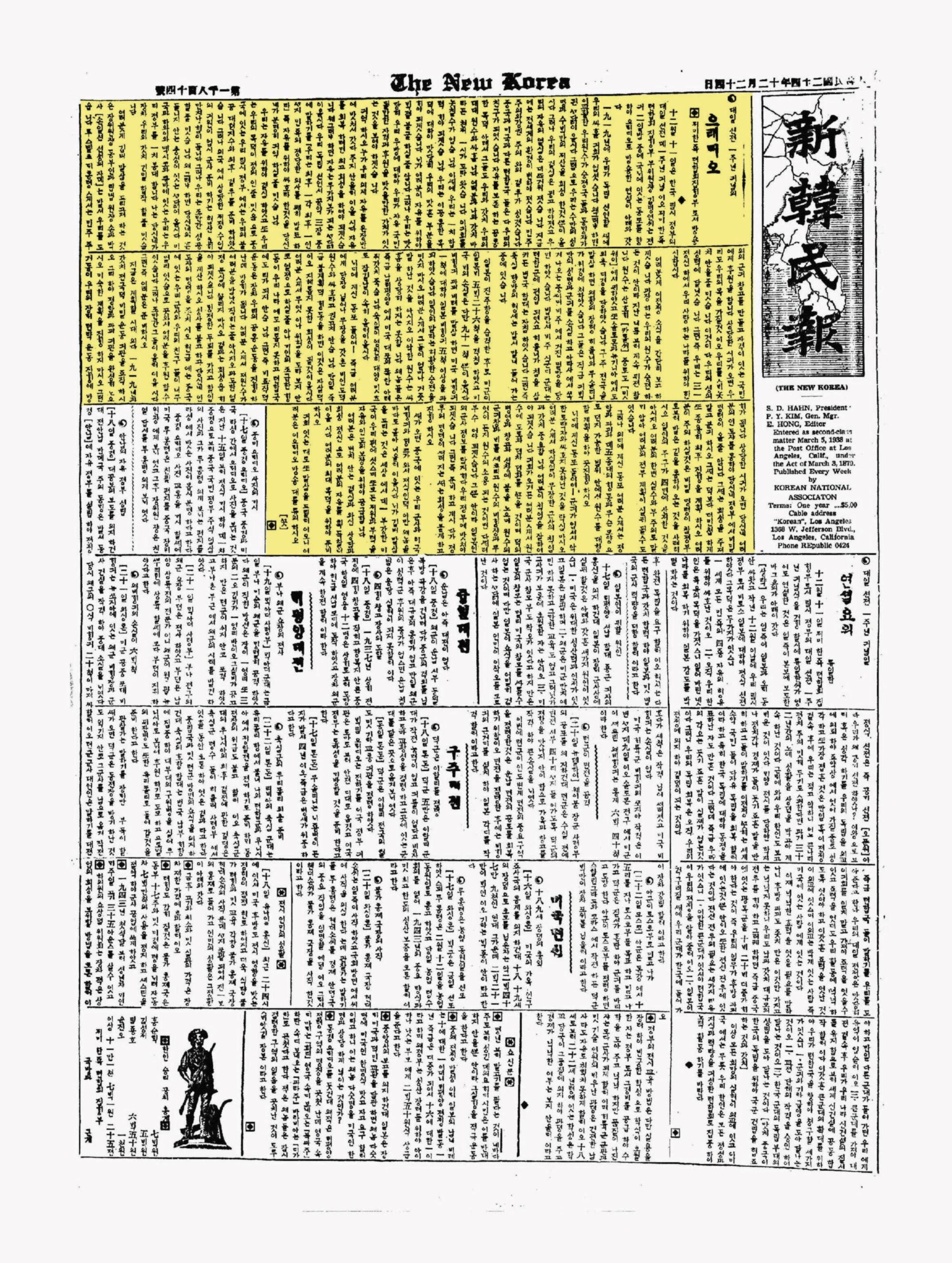 ▲Article from Sinhan Minbo featuring a radio speech by Vice Chairman Kim Byeong-yeon of the Korean National Association in America. Collection of the National Library of Korea.
━ Second Exhibition ━
An Ongoing Cube, 《Scorched Era, People》
In the inner section of the History Gallery on the fifth floor of the museum, visitors will find “Scorched Era, People,” which addresses the 1997 financial crisis. This exhibition features works by artists Noh Soon-taek and Hong Jin-hwon, including one calendar and two dual-channel videos. The photographs, videos, and computer graphics convey the sensiblility of that era and prompt visitors to revisit the financial crisis through a format that poses questions.
Lives Inscribed in Red
Artist Noh Soon-taek’s “Calendar of Scorched Labor” records the names and causes of death of workers who died in the workplace on the corresponding date from the modern period through April 2020 in red letters on a 1997 calendar. The sheer number of deaths makes them nearly impossible to read without straining your eyes up close. The artist says, “These deaths are interconnected like a net.”
The dual-channel videos were created from photographs by artists Noh Soon-taek and Hong Jin-hwon, respectively, along with computer graphics by Seo Yeong-geol. The two artists, who were in their late teens and twenties during the financial crisis, spent the following 20 years focused on labor and development issues. The computer graphics visualize key texts and audio from the museum’s oral history transcripts of the financial crisis. Artist Hong Jin-hwon handled overall editing.
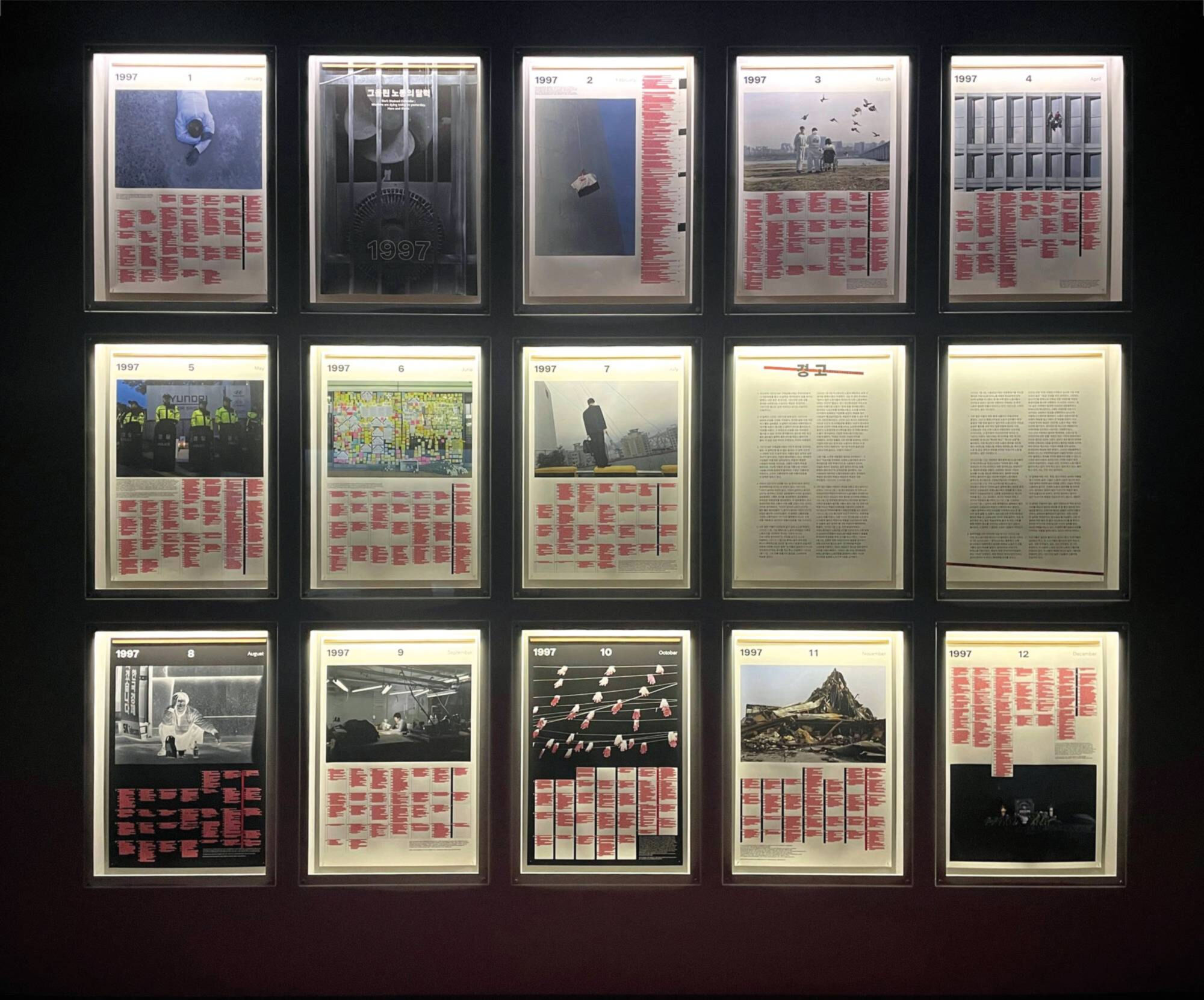 ▲ “Calendar of Scorched Labor” by artist Noh Soon-taek.
The Financial Crisis: An Era of Anxiety
For those who lived through 1997, the financial crisis evokes memories of the cascade of corporate bankruptcies led by banks, the “Korea First Bank Tearful Video” created during that process, the nationwide “Gold Collection Campaign” to overcome the crisis, and slogans like “Buy Korea” The reason for not using these archival records, which could serve as symbolic evidence, is the belief that the financial crisis cannot be reduced to a single past event.
The impact of the financial crisis on Korean society was comprehensive, affecting not only the economy but also social and cultural spheres. Korea, having been forcibly integrated into the international financial order after the crisis, appears on paper to have joined the ranks of developed nations. However, beneath the surface lies constant restructuring and the resulting chronic employment insecurity. The term “lifetime employment” disappeared, replaced by temporary and non-regular positions. Efficiency guarantees profitability, and failure in endless competition became synonymous with a failed life. The two artists were not immune to the terms that emerged to describe the younger generation just entering economic activity, such as the once-popular “880,000 won generation” and “sampo generation.” It is no coincidence that their photographs came to focus on issues of labor and development.
An Unfinished Cube
For both artists, the financial crisis is not over but remains ongoing to this day. This is also why the photographs and materials used in the exhibition do not remain confined to 1997. This differs from the conventional concept of historical materials in the National Museum of Korean Contemporary History. I recall being inwardly surprised five years ago when Kim Su-jin, then a curator in the Exhibition Division (currently director of the Education Division), told me about the exhibition direction, saying, “I hope this exhibition will be created with artists’ works.” Using the visual grammar standard in art museums within a museum—indeed, in a history gallery—was a highly unusual attempt at that time.
The financial crisis was utter chaos at the time, too complex to be explained by a few clear pieces of “evidence,” and its consequences resemble an infinite cube with no boundaries. Art offers a way to address this.
For visitors who remember that time, this exhibition may create an unintended sense of unfamiliarity. I believe that what fills the empty gaps between the photographs, which serve as fragmentary, unclear evidence, is the visitor’s “historical imagination.” If the financial crisis was not a one-time event of the past, but its harmful consequences continue to this day, then we, the people living in this era, are the ones who must resolve it.
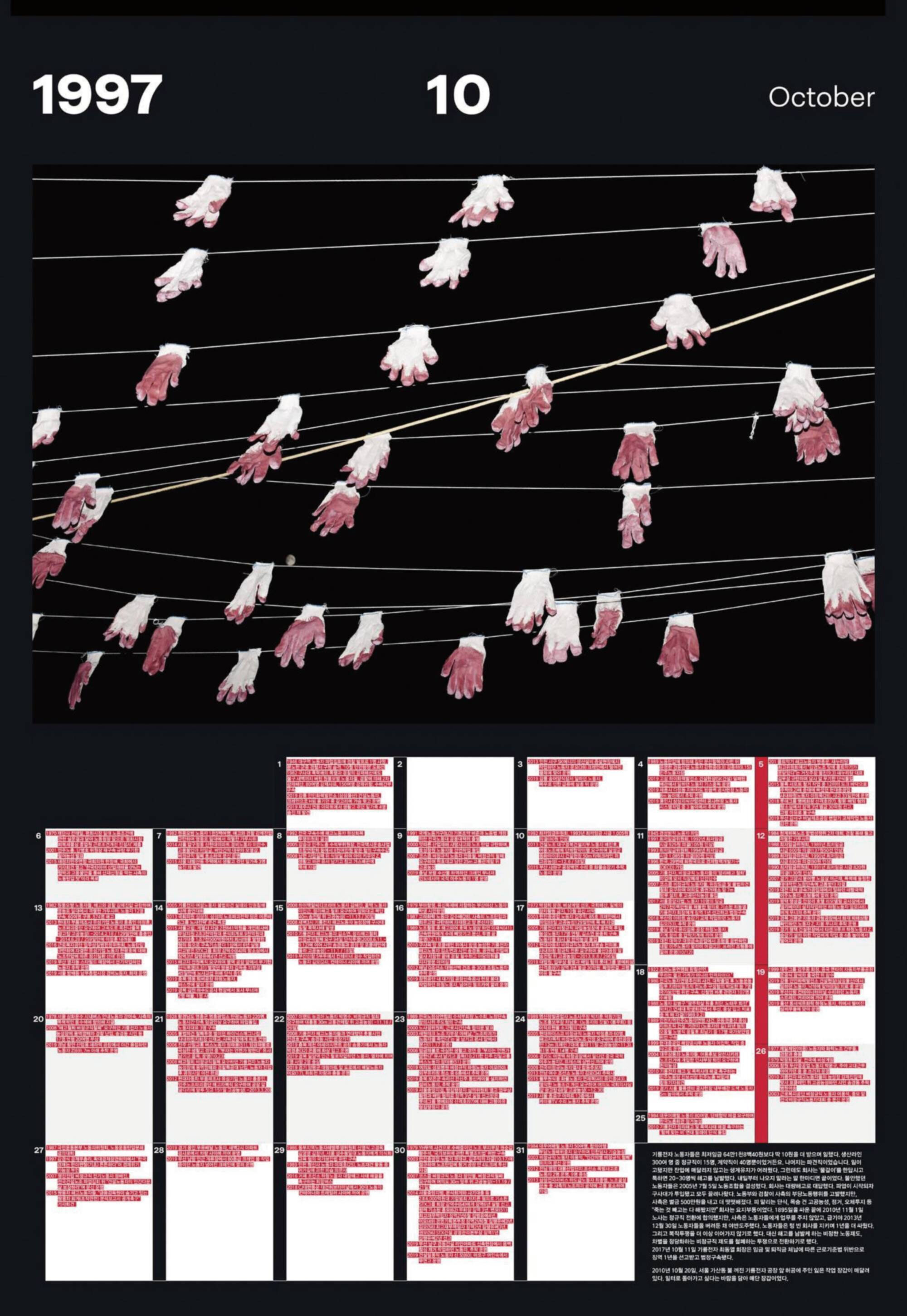 ▲ “October from Calendar of Scorched Labor” by artist Noh Soon-taek.
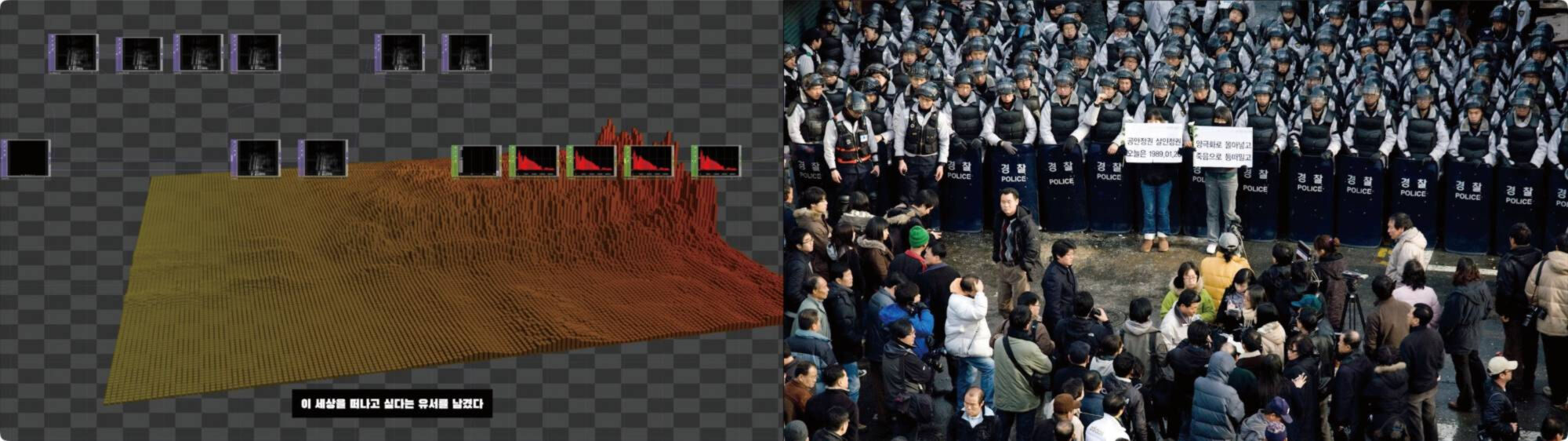 ▲ Video by artist Hong Jin-hwon.
━ An Exhibition in Comics ━
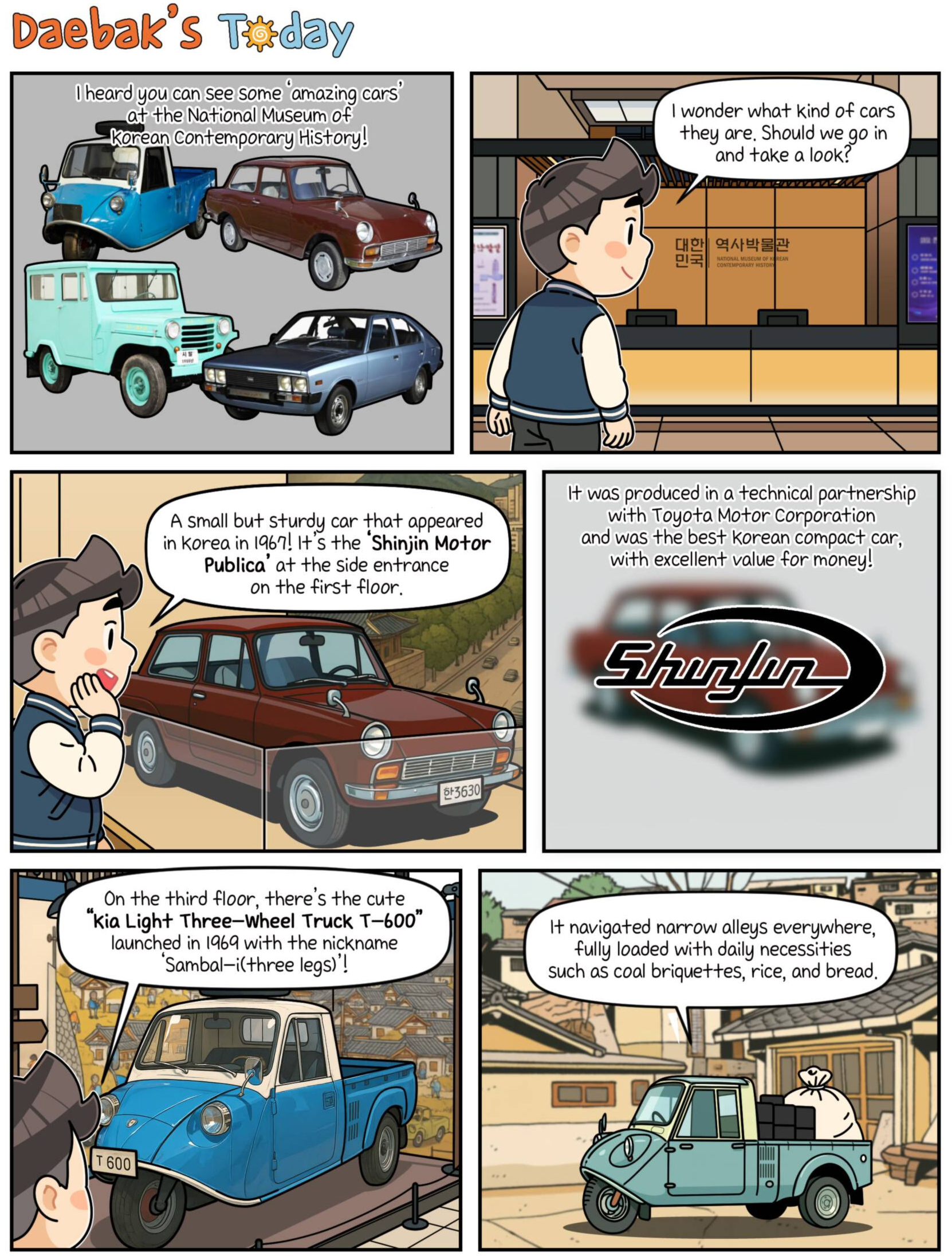
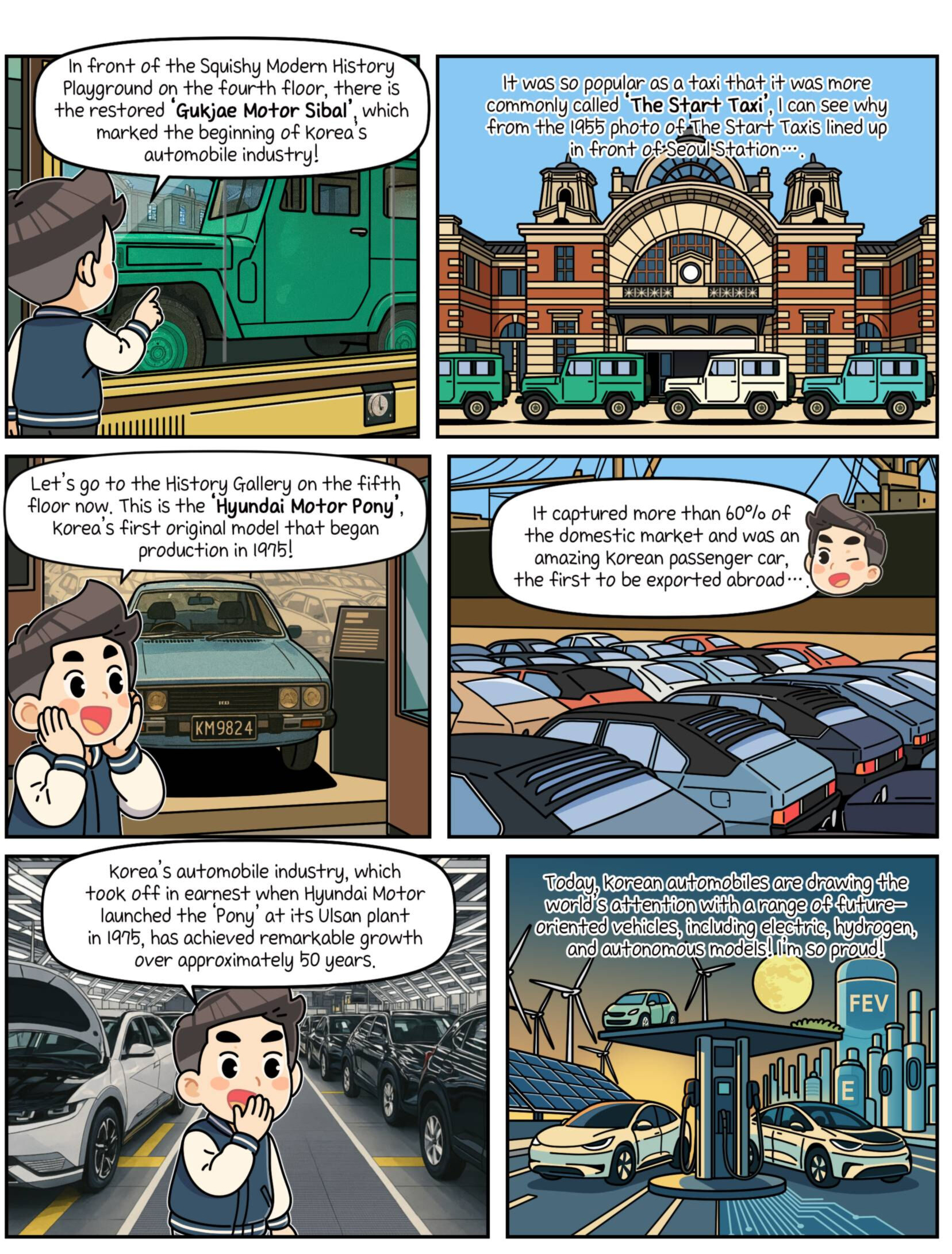
Daebak’s Today
Those Cars, Those Times ‘Automobiles at the National Museum of Korean Contemporary History’
━ Museum People ━
“Our goal is to create a space visitors can trust”
The National Museum of Korean Contemporary History’s Central Control Room and Facilities Operations Office
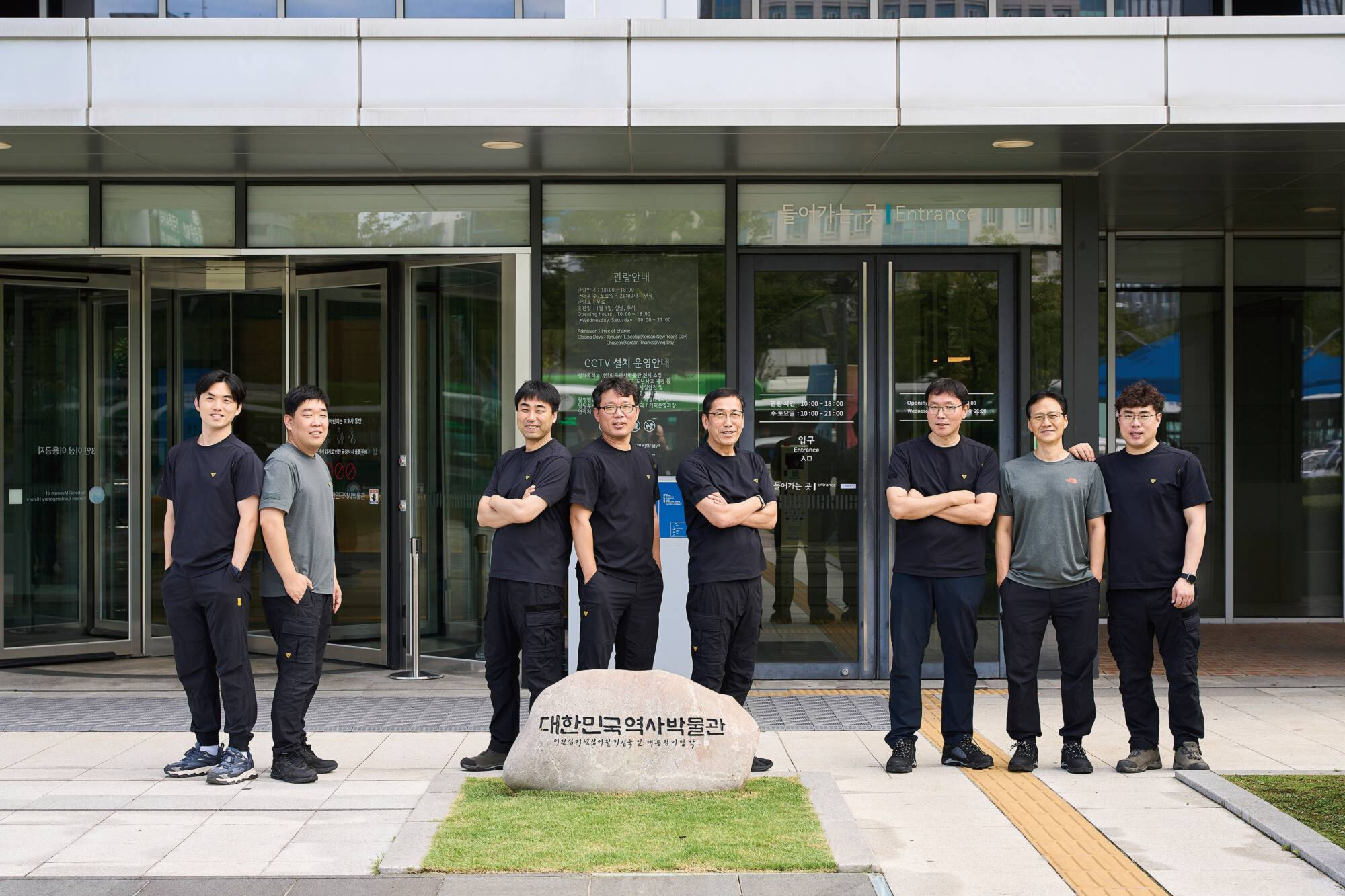 ▲ (From left) Facilities Operations Office staff members Kim Min-ha, Jeon Yeong-gil, and Kim Tae-geun; Central Control Room Director Oh Jeong-gyun and Director Kim Yong-deok; Facilities Operations Office staff members Jeong Myeong-yong, Jang Gwang-ho, and Go Hyeok-su.
At the National Museum of Korean Contemporary History in the heart of Gwanghwamun, Seoul, the lights turn on precisely at 10 AM every morning, and indoor temperature and humidity remain consistently maintained even as countless visitors come and go. The operation is as meticulous and precise as a finely designed timepiece. Close collaboration, strict adherence to protocols, and repeated training for unexpected situations continue daily to ensure stability even in the face of the smallest variables. These are the stories of the unsung heroes who keep the museum safe and operational behind the scenes: the Central Control Room, which serves as the museum’s brain, and the Facilities Operations Office, which functions as its heart.
Q.Please tell us about the Central Control Room.
The Central Control Room is literally the museum’s “brain.” We monitor more than 100 CCTV cameras installed inside and outside the museum 24 hours a day in real time, closely observing all movements. We have systems in place to respond immediately to emergencies such as fires, theft, and suspicious activity, and we maintain constant emergency contact networks with relevant agencies, including the police and fire departments. We pay especially close attention to areas that require security, such as exhibition halls and storage facilities, with multiple layers of monitoring.
Q. What makes the Central Control Room special?
Since we oversee the museum’s operations in real time, we maintain constant vigilance. Additionally, we always carry separate notification phones in addition to our personal mobile phones. These notification phones not only help us conduct visitor guidance announcements at scheduled times but also ensure that equipment in each location operates on time. Furthermore, we check sunrise and sunset times every morning to ensure that the interior and exterior lighting of the museum operate correctly.
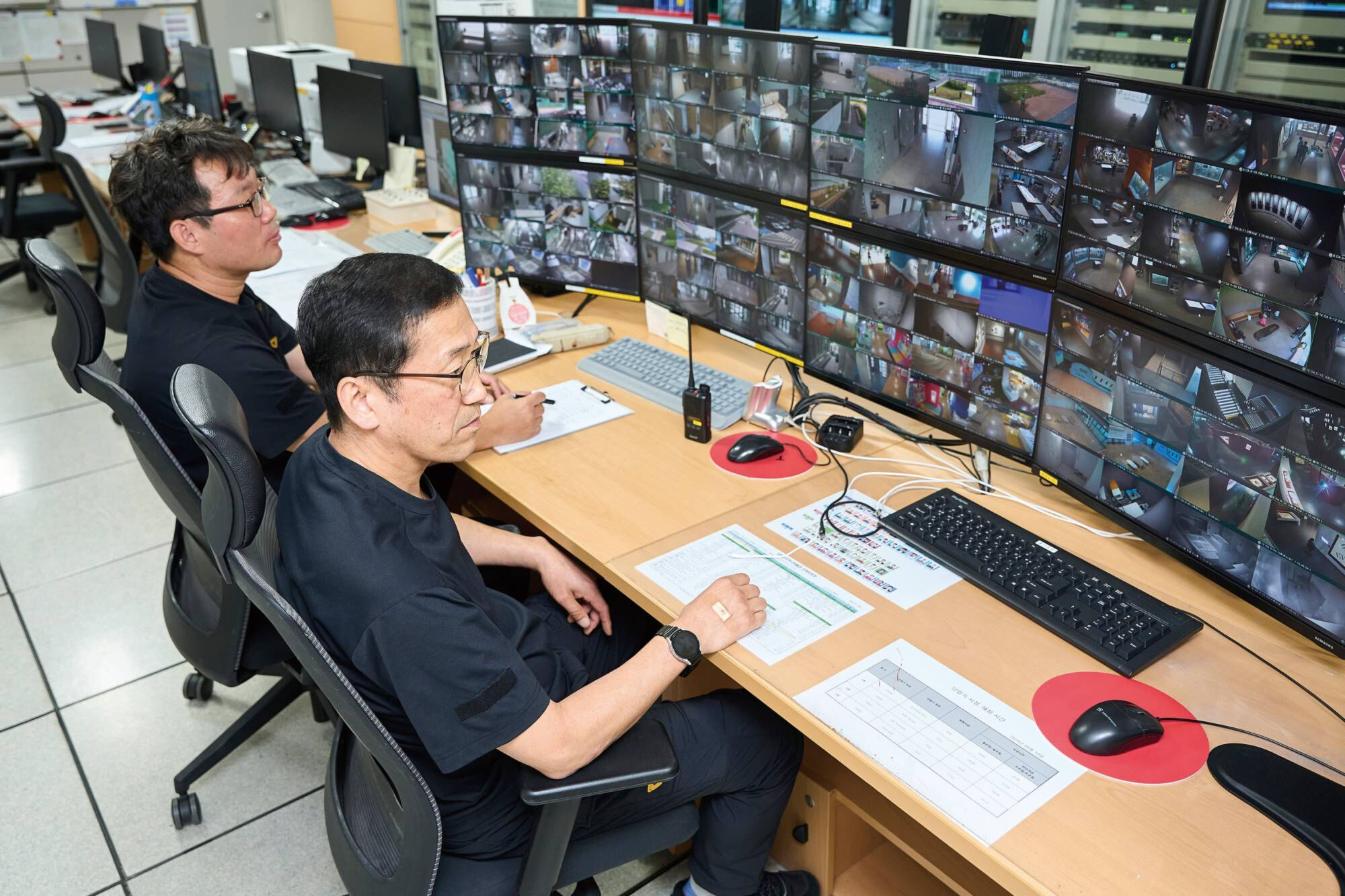 ▲ Central Control Room.
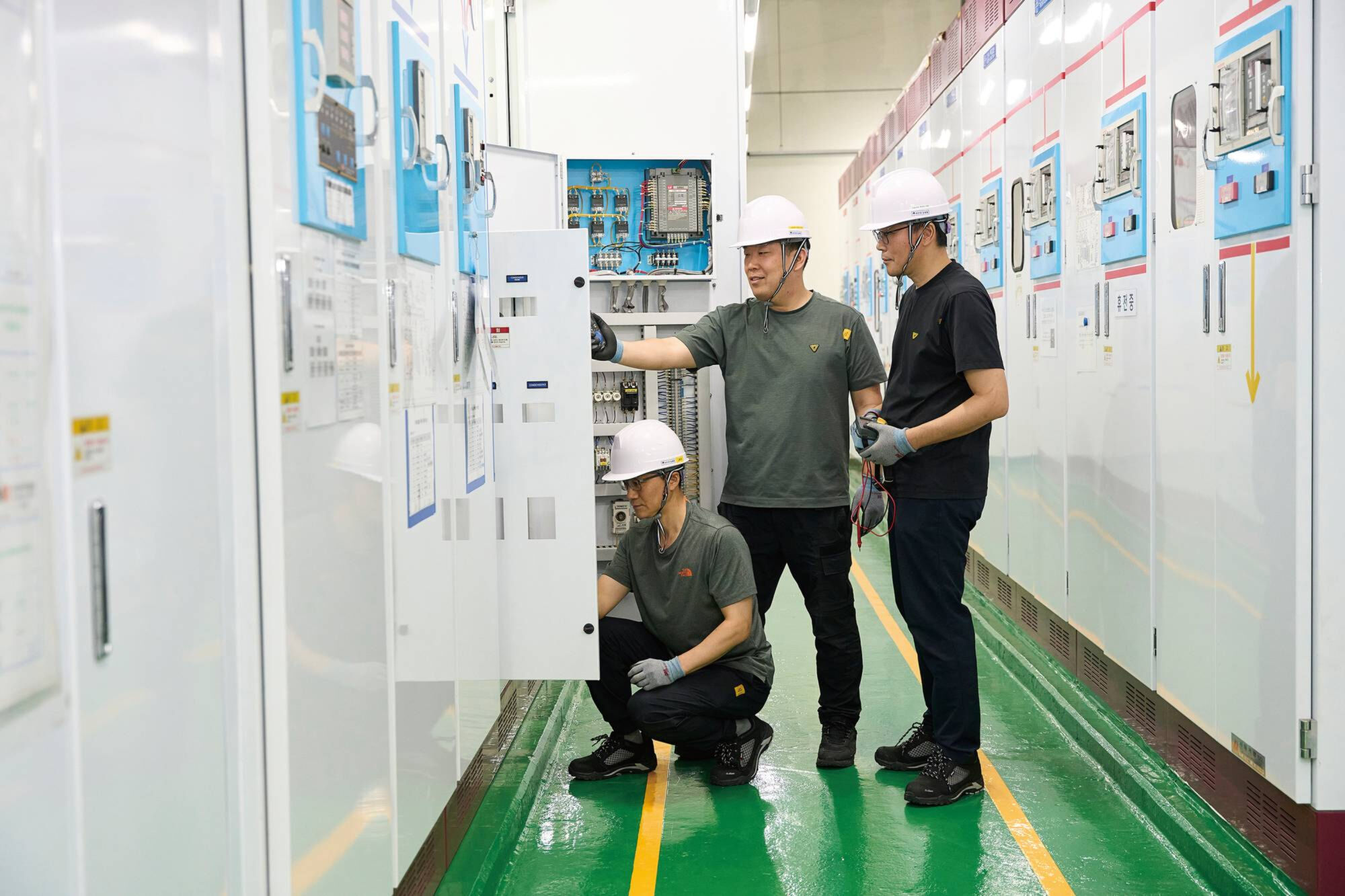 ▲ Facilities Operations Office.
Q. Please also introduce the Facilities Operations Office.
The Facilities Operations Office can be called the museum’s “heart.” Four teams involved in architecture, landscaping, mechanical, and electrical, work together organically. Team members with different roles and capabilities collaborate for smooth museum operations and a comfortable visitor experience. Our work involves overseeing the entire system from the museum’s spatial organization to environmental design, facility management, and energy operations.
Q. What does the Facilities Operations Office prioritize most?
One area we focus on most is maintaining temperature and humidity. We also frequently monitor carbon dioxide and fine dust levels with sensors to provide a comfortable environment. Since museums are spaces that must both preserve precious artifacts and accommodate many visitors, it is essential to maintain a stable indoor environment, which is different from ordinary buildings. We also emphasize inter-team collaboration. Each team shares current issues and work situations in the operations meetings held every morning, and we coordinate in advance on matters that might affect each other’s work. Even small suggestions are freely proposed during these meetings and developed into better methods that are then reflected in actual operations.
Q. How do the two departments collaborate?
The Central Control Room and Facilities Operations Office work closely together to ensure that the museum operates smoothly. While we focus on our respective areas, we share information in real time and communicate immediately to find solutions when problems arise. Various elements, such as exhibition environment maintenance, security, and facility inspections, are connected between the two departments, making it difficult to resolve issues effectively without cooperation.
Q. Please share your plans for the future.
When we say plans, we don’t have any grand ambitions. Above all, our greatest goal is to make sure that the museum’s materials and facilities are well protected and that visitors enjoy the exhibitions can safely and comfortably before returning home. As we have done until now, the Central Control Room and Facilities Operations Office will continue to quietly fulfill their responsibilities by continually adopting the latest security technologies and operational systems so that the museum remains an even more trusted space.
“As we have done until now, the Central Control Room and Facilities Operations Office will continue to quietly fulfill their responsibilities by continually adopting the latest security technologies and operational systems so that the museum remains an even more trusted space.”
━ News from the National Museum of Korean Contemporary History ━
Efforts to Spread Democratic Values, MOU Between the National Museum of Korean Contemporary History and the Korea Democracy Foundation
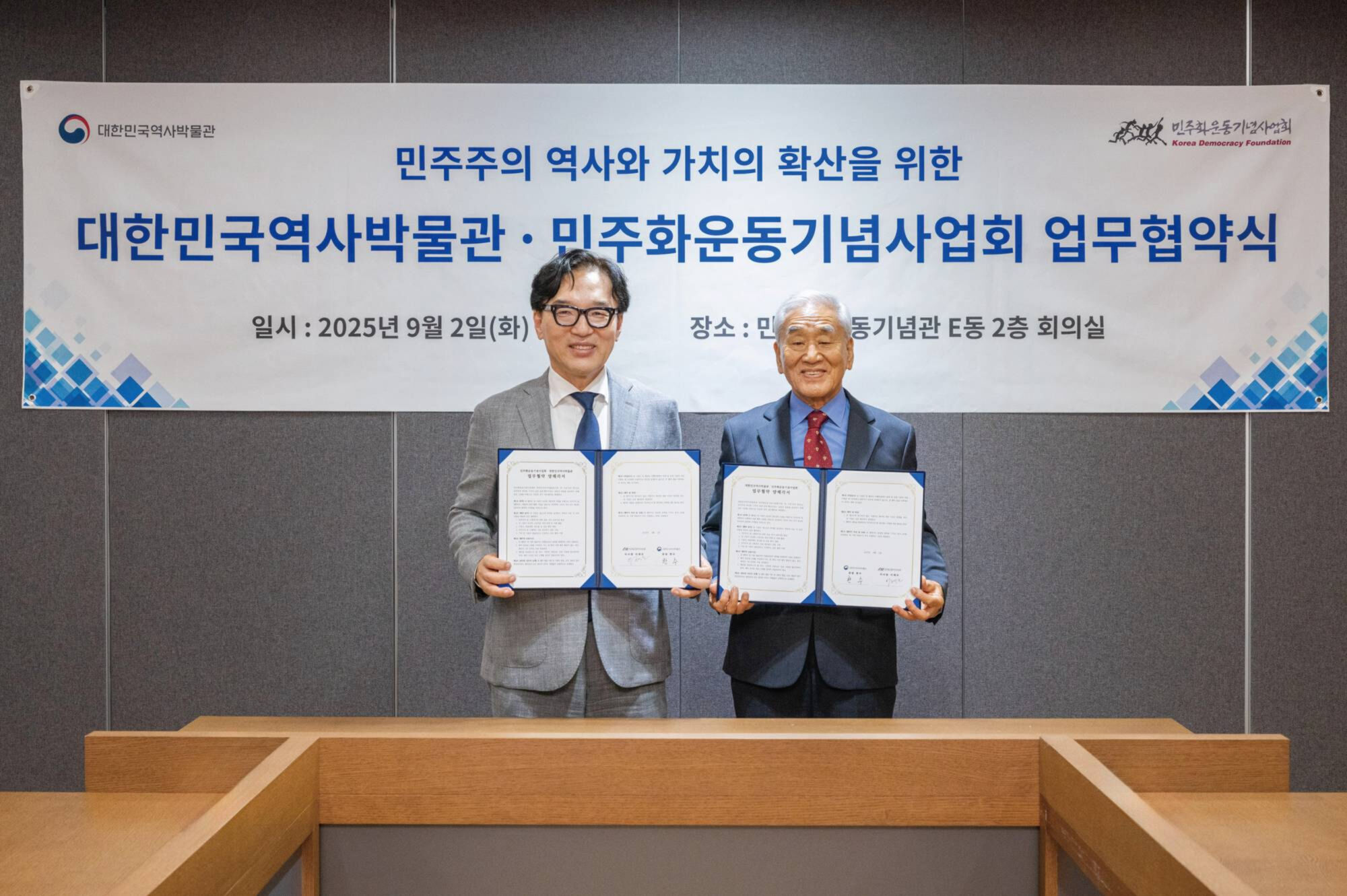
The National Museum of Korean Contemporary History and the Korea Democracy Foundation signed a memorandum of understanding to promote the history and values of democracy at 3 PM on September 2 at the Memorial Hall for Democracy in Yongsan-gu, Seoul. Through this memorandum, both institutions will strengthen cooperation in exhibitions, education, and research, and pursue various joint projects to raise public awareness of history and spread democratic values. Key areas of collaboration include discovering joint exhibition and education projects related to democracy and Korea’s modern and contemporary history, the use of resources such as lending and reproducing materials from the collections of both institutions, co-hosting commemorative ceremonies, academic conferences, and workshops, and establishing a network of materials on democracy and modern and contemporary history.
A Special Concert to Celebrate Autumn, “Noontime Concert” Featuring Musicians with Developmental Disabilities
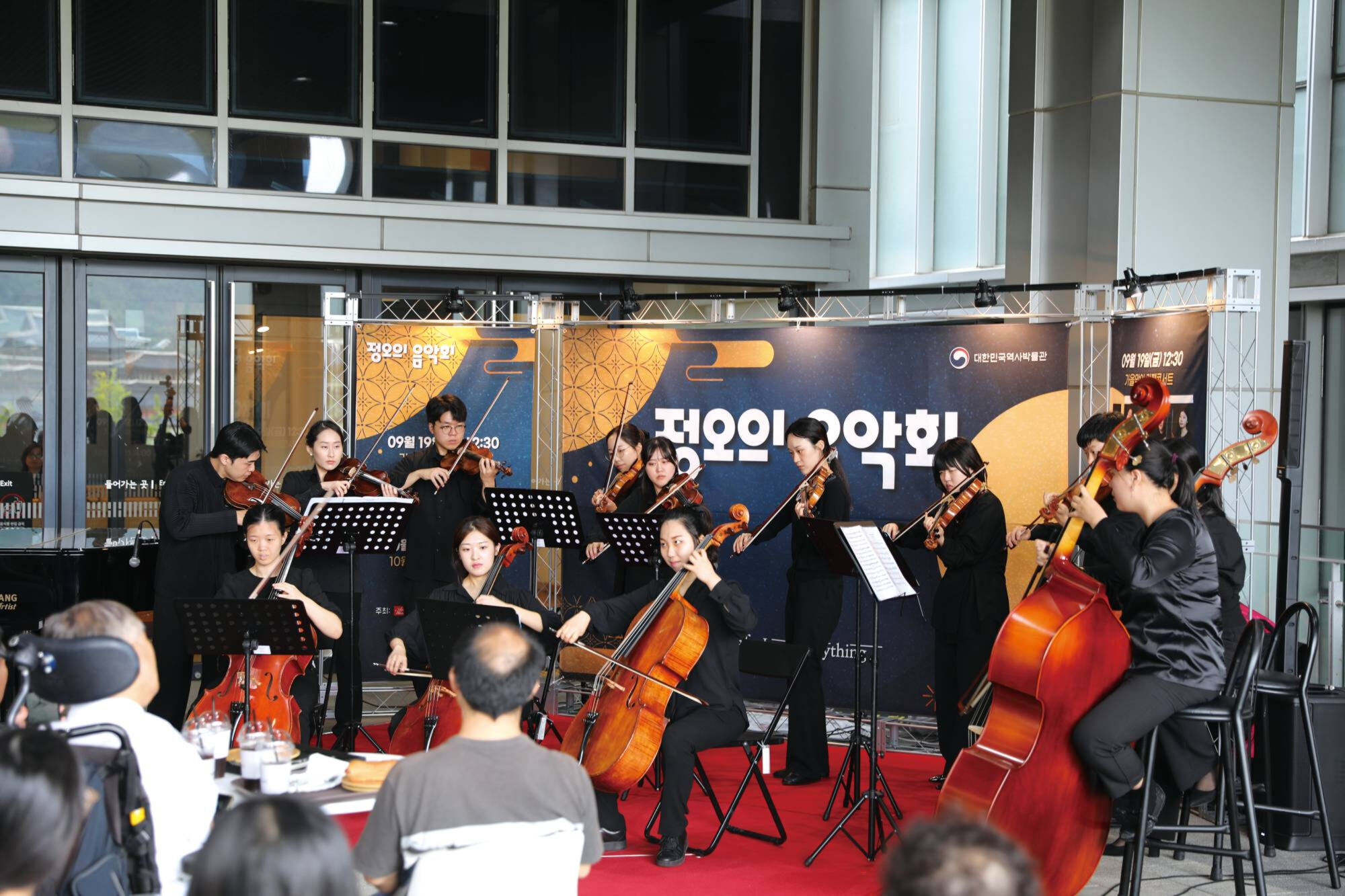
An exceptional performance, “Noontime Concert,” where visitors could fully experience the autumn atmosphere, was held in the outdoor space on the third floor of the National Museum of Korean Contemporary History, which offers panoramic views of Gwanghwamun. The cafe “I Got Everything,” where the performance took place, is part of a project launched by the Korea Disabled People’s Development Institute in 2016 to provide stable employment for baristas with severe disabilities, and the National Museum of Korean Contemporary History branch is particularly significant as the first location in a national museum.
The 30-minute lunchtime performances in the outdoor space, set against clear autumn skies, began with the “Autumn Welcoming Cafe Concert” on September 19, followed by the “Chuseok Traditional Music Concert” on October 9 and “A Wonderful October Concert” on October 24. Approximately 20 musicians with developmental disabilities from ART WECAN (Director Wang So-young), the Korea Developmental Disabilities Culture and Arts Association that operates “I Got Everything” under consignment, participated in the concert.
The 80th Anniversary of Liberation, Independence, and Inter-Korean Exchange, <2025 Unification Culture Policy Forum> Co-hosted with the Korea Culture and Tourism Institute
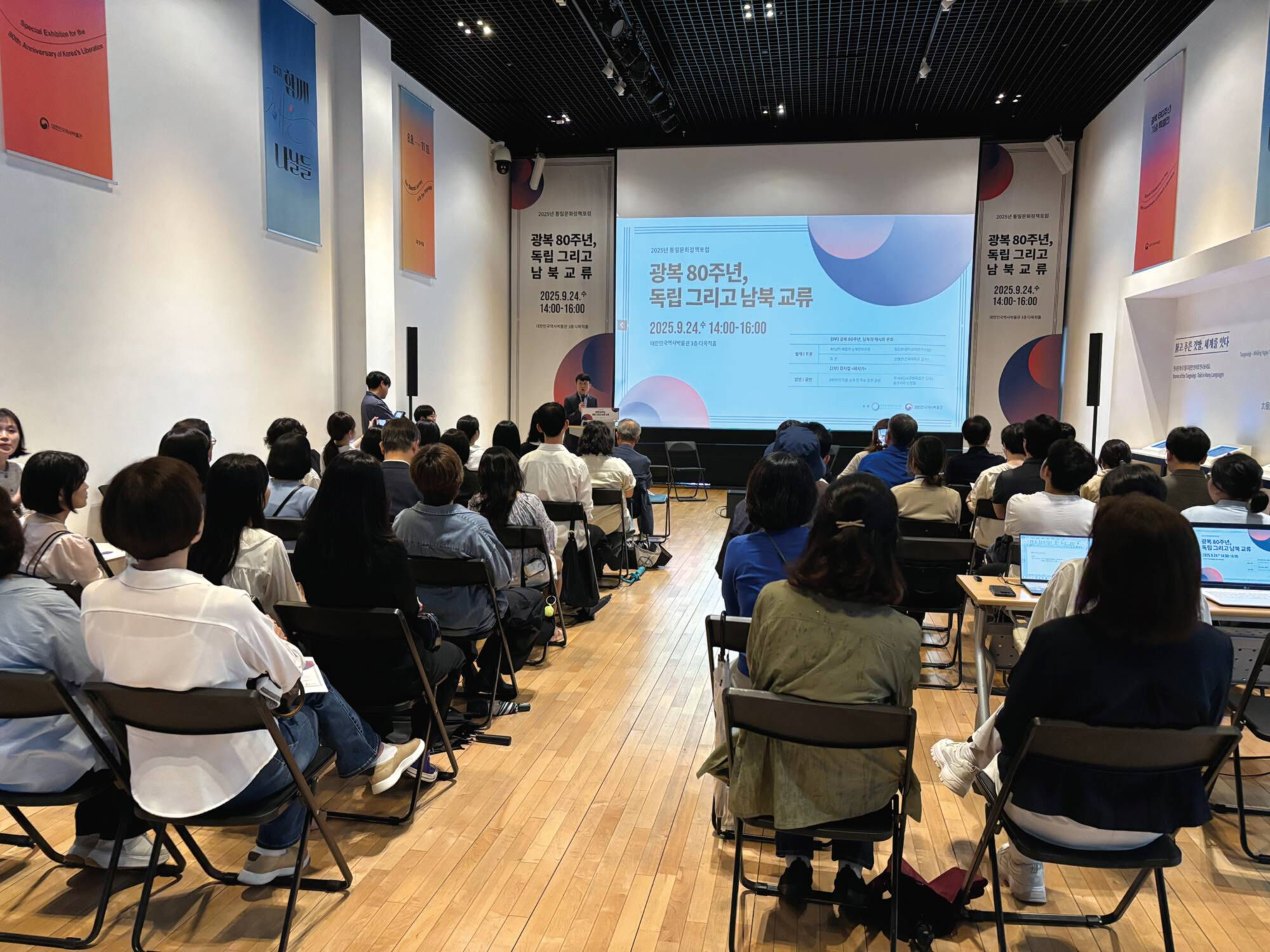
The National Museum of Korean Contemporary History, together with the Korea Culture and Tourism Institute, held the “2025 Unification Culture Policy Forum” on the theme “80th Anniversary of Liberation, Independence, and Inter-Korean Exchange,” starting at 2 PM on September 24 in the museum’s multipurpose hall on the third floor. The first part of the forum, themed “80th Anniversary of Liberation: History and Culture of the Two Koreas,” featured a presentation on inter-Korean relations and new directions for inter-Korean cultural exchange by Director Jeong Chang-hyeon of the Institute for Peace and Economic Integration. Professor Jeon Yeong-seon of Konkuk University conducted the discussion. The second part of the forum explored the independence activist Choi Jae-hyeong through the musical Pechika. This musical, a creative work about Choi Jae-hyeong, a steadfast supporter of independence activist Ahn Jung-geun, featured a work commentary by Director Giuseppe Kim (K-Culture Independence Army), followed by performances of key scenes.
Learning History With the Taegeukgi, Special Children’s Education Linked to the Exhibition “The Taegeukgi We Draw”
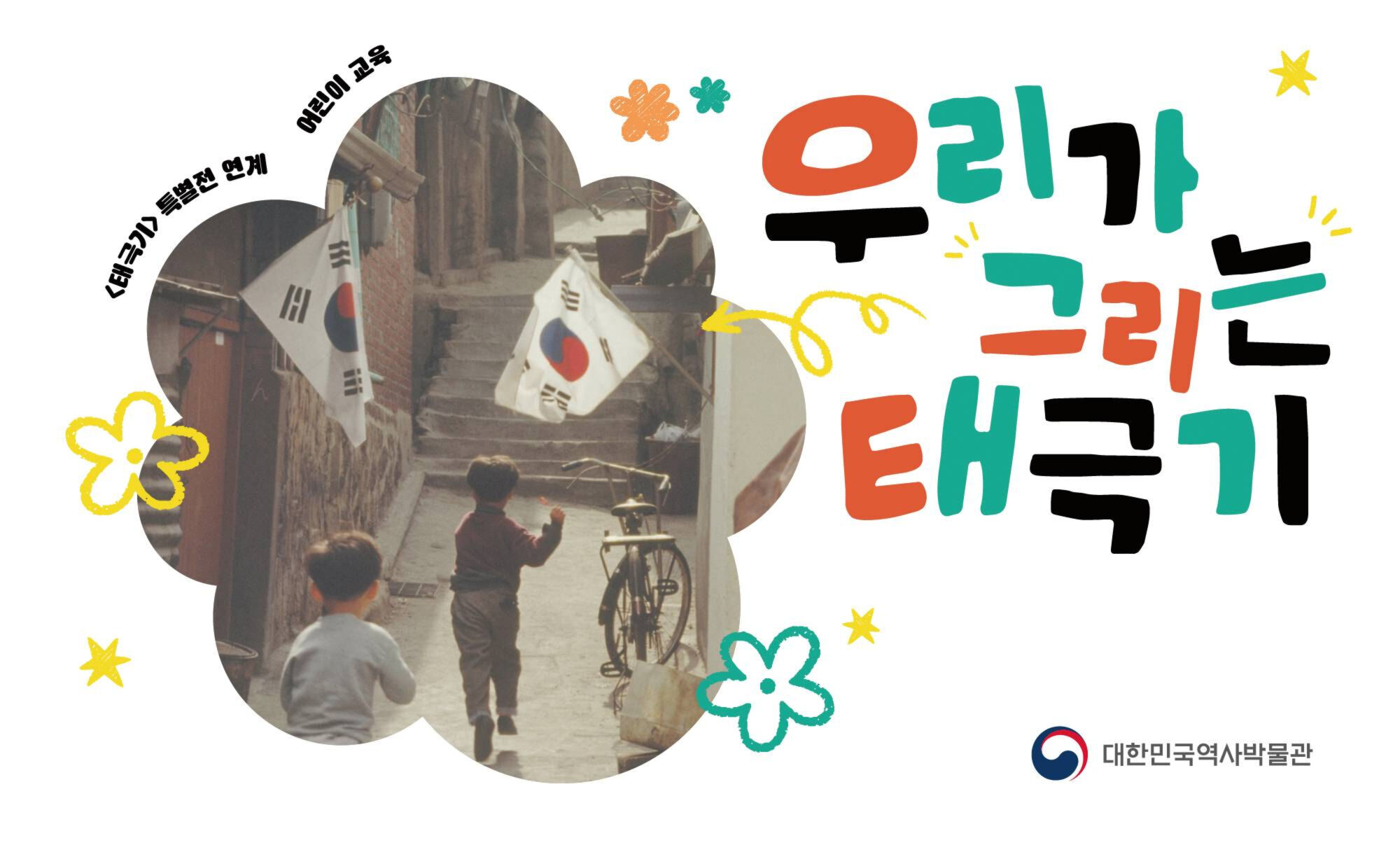
The Education Division of the National Museum of Korean Contemporary History is conducting special exhibition-linked education for groups of fifth and sixth-grade elementary school classes from October 22 through November 12. Participating children examine the Taegeukgi in Korean history from the late 19th century through liberation in 1945 and observe actual Taegeukgi artifacts, which are important historical objects, in the exhibition hall. They also have time to reflect on the meaning of the Taegeukgi with a hands-on activity of assembling Taegeukgi magnet puzzles.
Interactive and Experiential Citizen Lectures, “Visible Contemporary History, Audible Contemporary History”
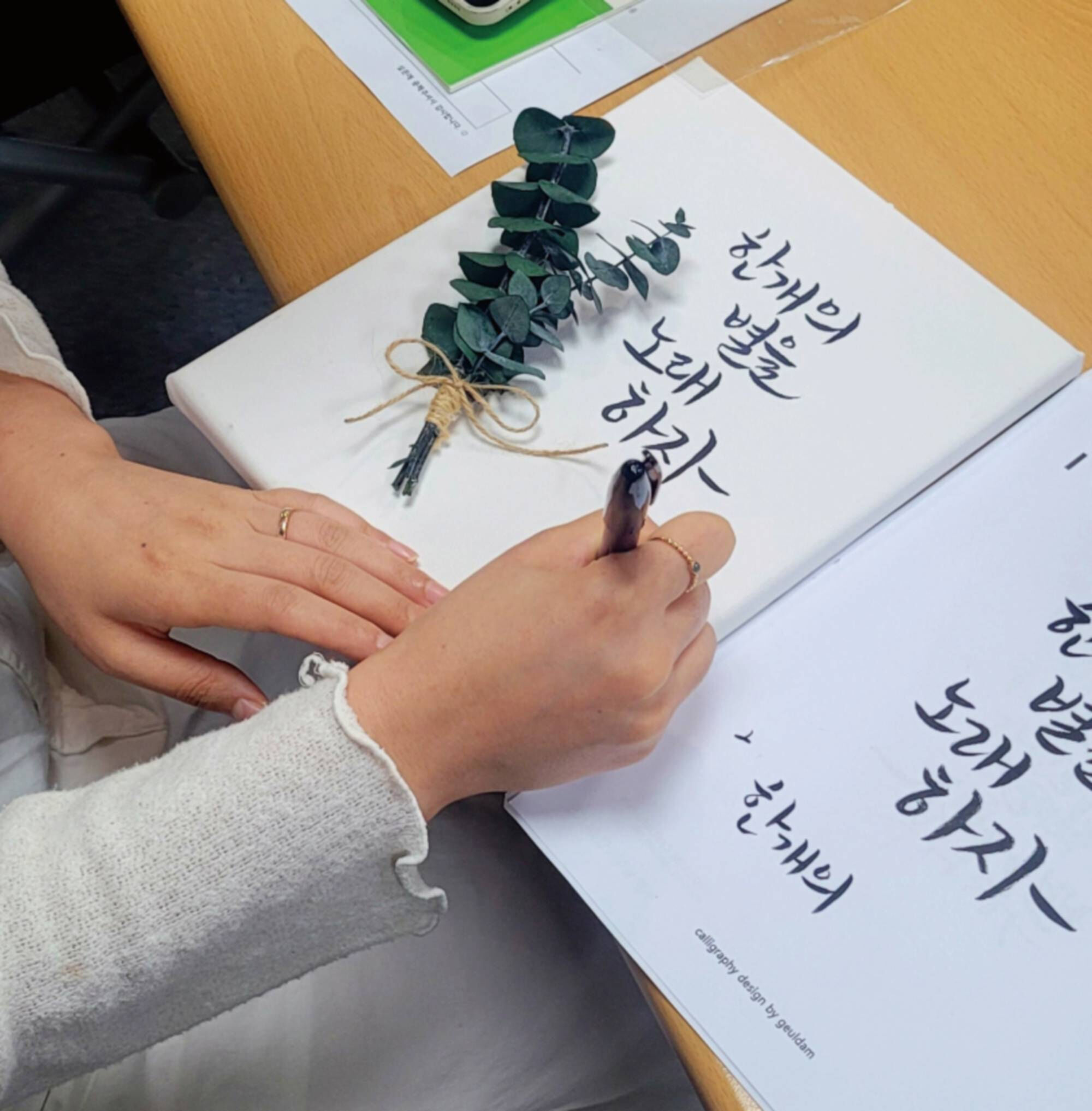
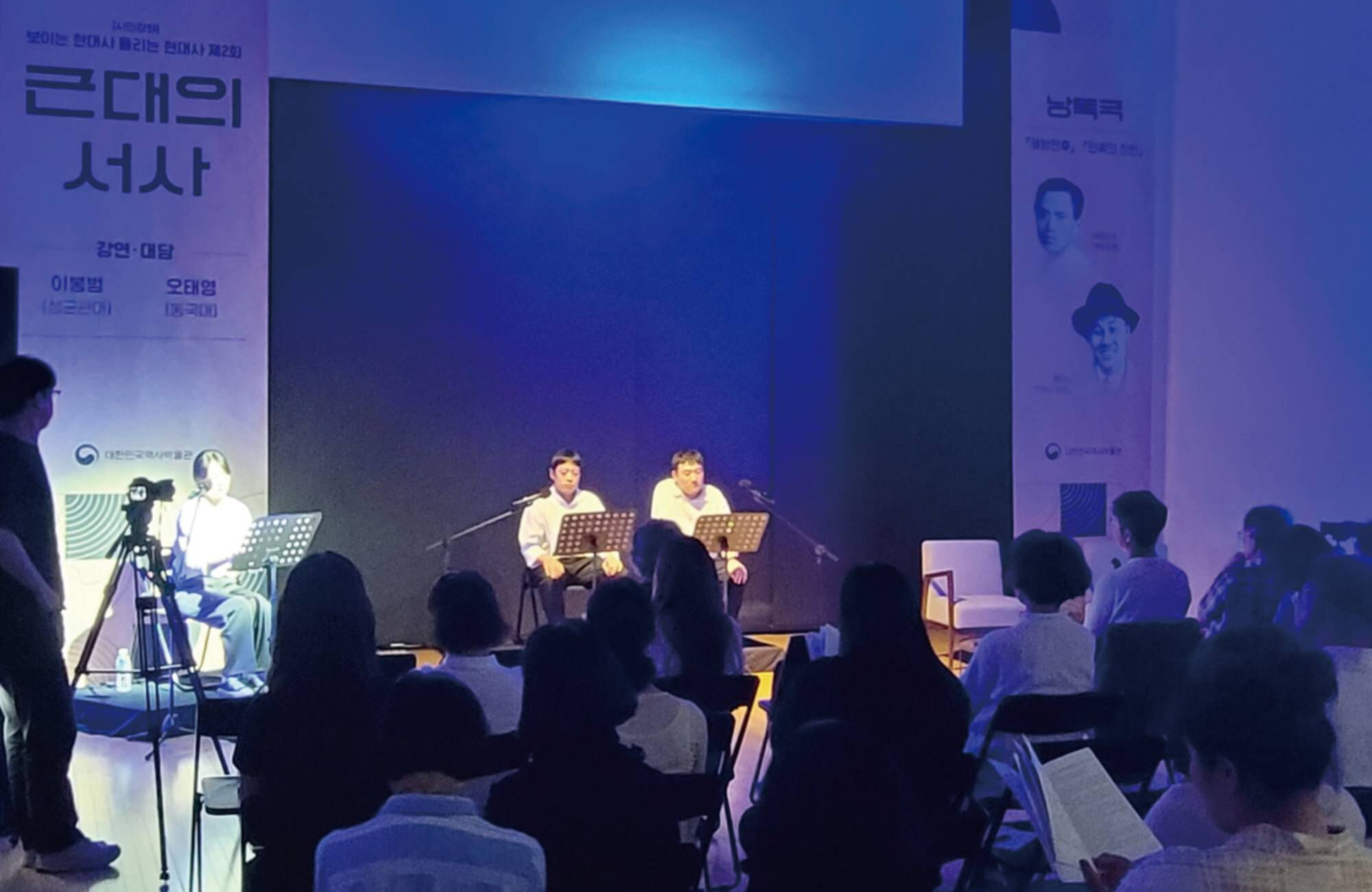
To commemorate the 80th anniversary of liberation, the National Museum of Korean Contemporary History operated the citizen lecture series “Visible Contemporary History, Audible Contemporary History” on the theme of “Cultural and Artistic Materials from the Liberation Period Collection.” The lectures were held once a month from June 25 through October 29 for a total of five sessions, covering liberation-era poetry, short fiction, documentary films, Taegeukgi design, and gramophone records. “Visible Contemporary History, Audible Contemporary History” is an interactive and experiential lecture series that combines free-form discussions with hands-on activities such as calligraphy, dramatic readings, archivist experiences, and the creation of Taegeukgi merchandise.
Revisiting the History and Meaning of the Taegeukgi, The Fourth Modern and Contemporary History Colloquium, “The Hidden Story of the Establishment of the Taegeukgi”
 \
\
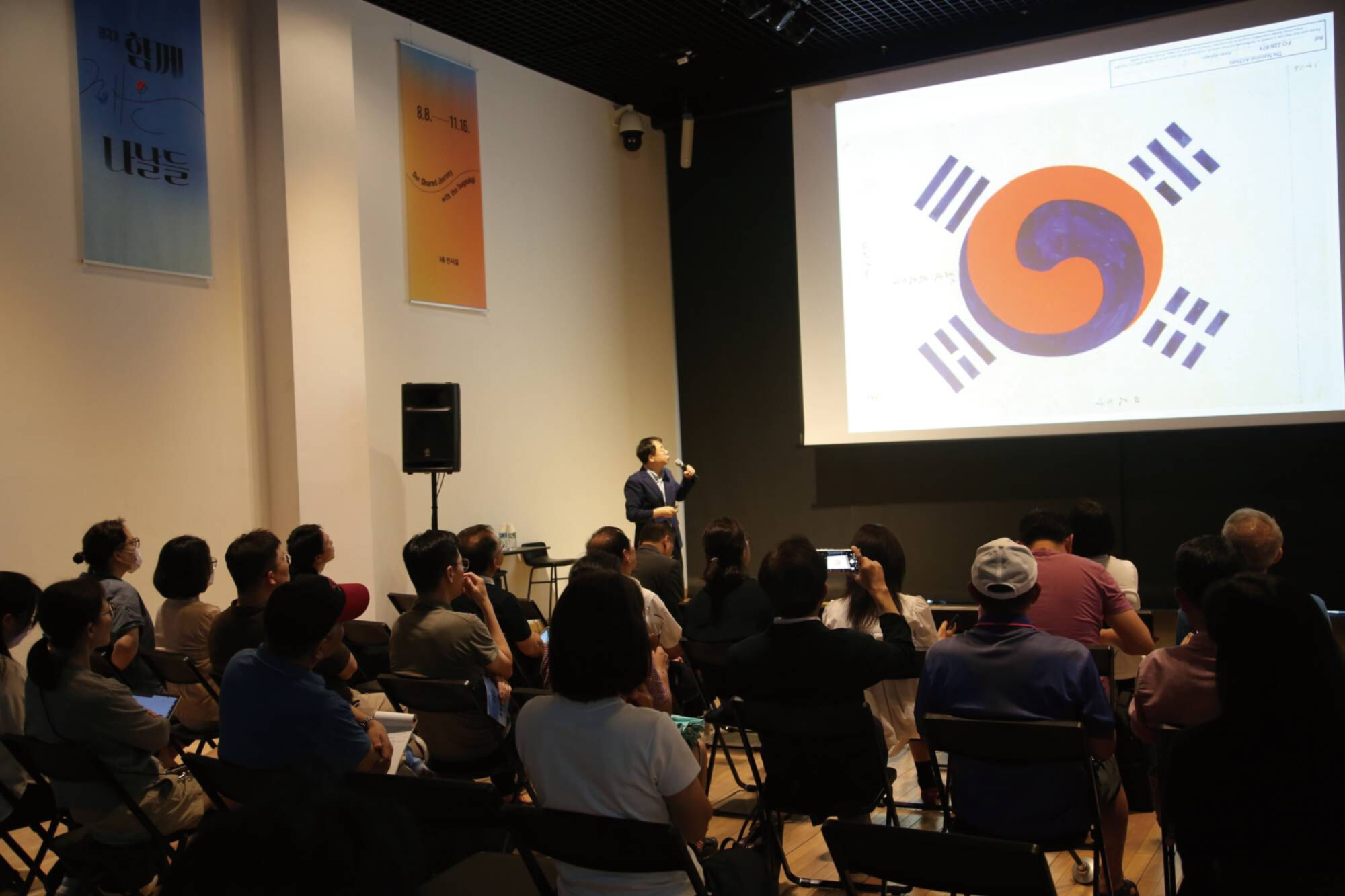
The Fourth Modern and Contemporary History Colloquium held on August 22 featured a presentation by Kim Do-hyeong, former senior researcher at the Independence Hall of Korea, followed by a discussion with Yeom Kyeong-hwa, director of the Research Division at the National Museum of Korean Contemporary History, and a Q&A session. In connection with the special Taegeukgi exhibition commemorating the 80th anniversary of liberation, the colloquium examined the origins and establishment of the Taegeukgi, Korea’s national flag. It reflected on its meaning and evolution as it has been variously perceived and used over time.
Joint Academic Conferences with Domestic and International Partner Institutions, a Forum for Academic Exchanges with In-Depth Examinations of Korean Contemporary History
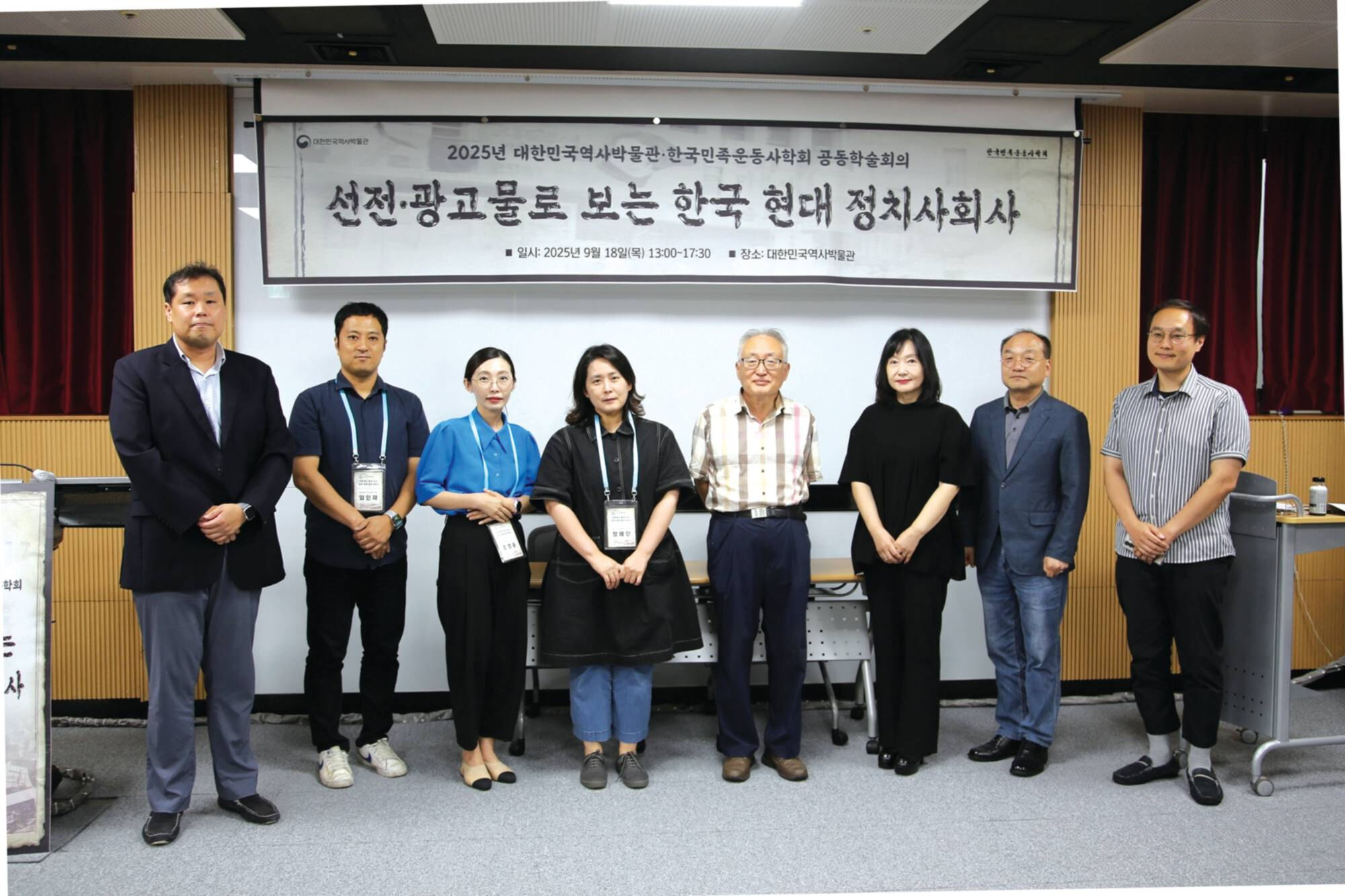
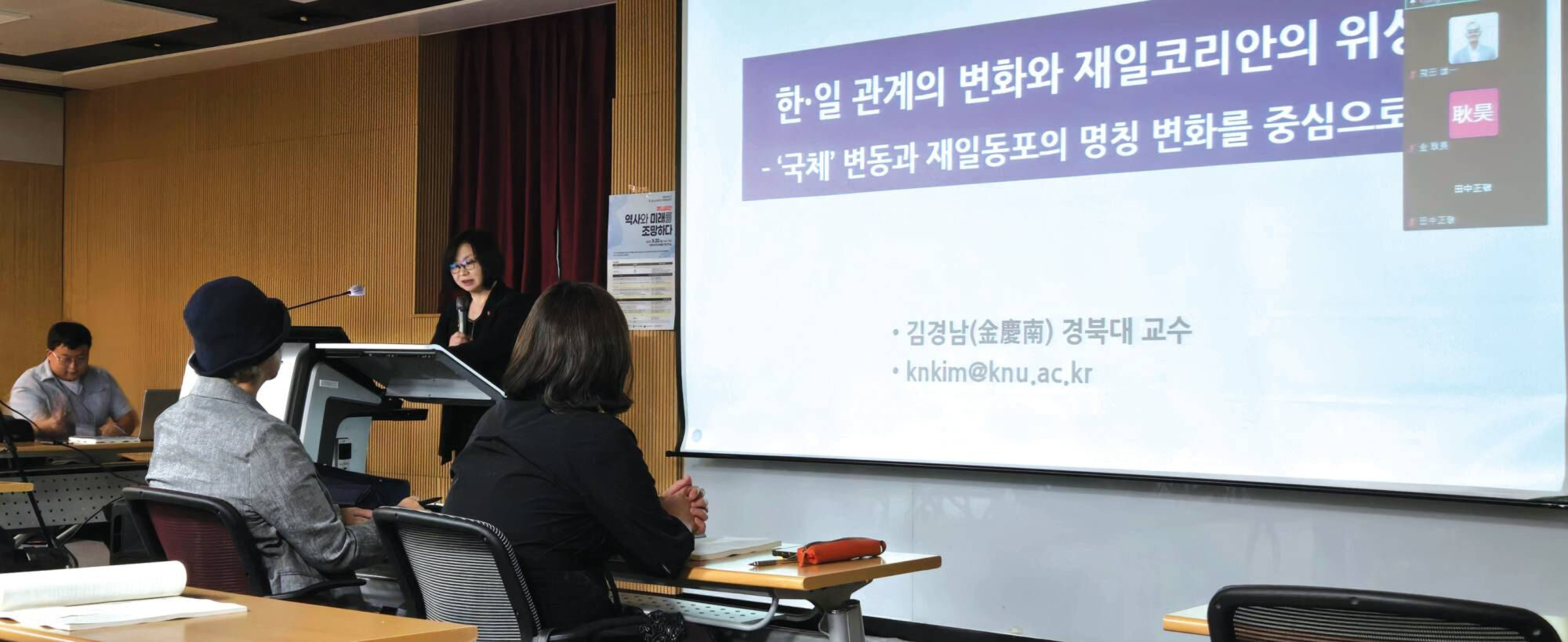
The National Museum of Korean Contemporary History held joint academic conferences with domestic and international partner institutions. First, on September 18, the museum co-hosted “Korean Modern Political and Social History Through Propaganda and Advertising” with the Association for Historical Studies on the Korean National Movement, and examined the changes in propaganda and advertising in Korean contemporary history and their impact on the public from various angles. Subsequently, on September 20, the museum held an international academic conference, “Zainichi Koreans: Examining History and Future,” to commemorate the 80th anniversary of liberation and the 60th anniversary of Korea-Japan diplomatic relations. This academic conference, organized jointly by the museum, the Association of Korean-Japanese National Studies, the Society for the Study of the Zainichi Korean Movement, and the Historical and Cultural Archive Research Center of the Institute for Humanities at Kyungpook National University, featured experts from both Korea and Japan who broadly examined the history and future of “Zainichi Koreans.”
Exploring Korea’s Contemporary History Through Archival Footage: Additional “Contemporary History in Motion” Videos Released
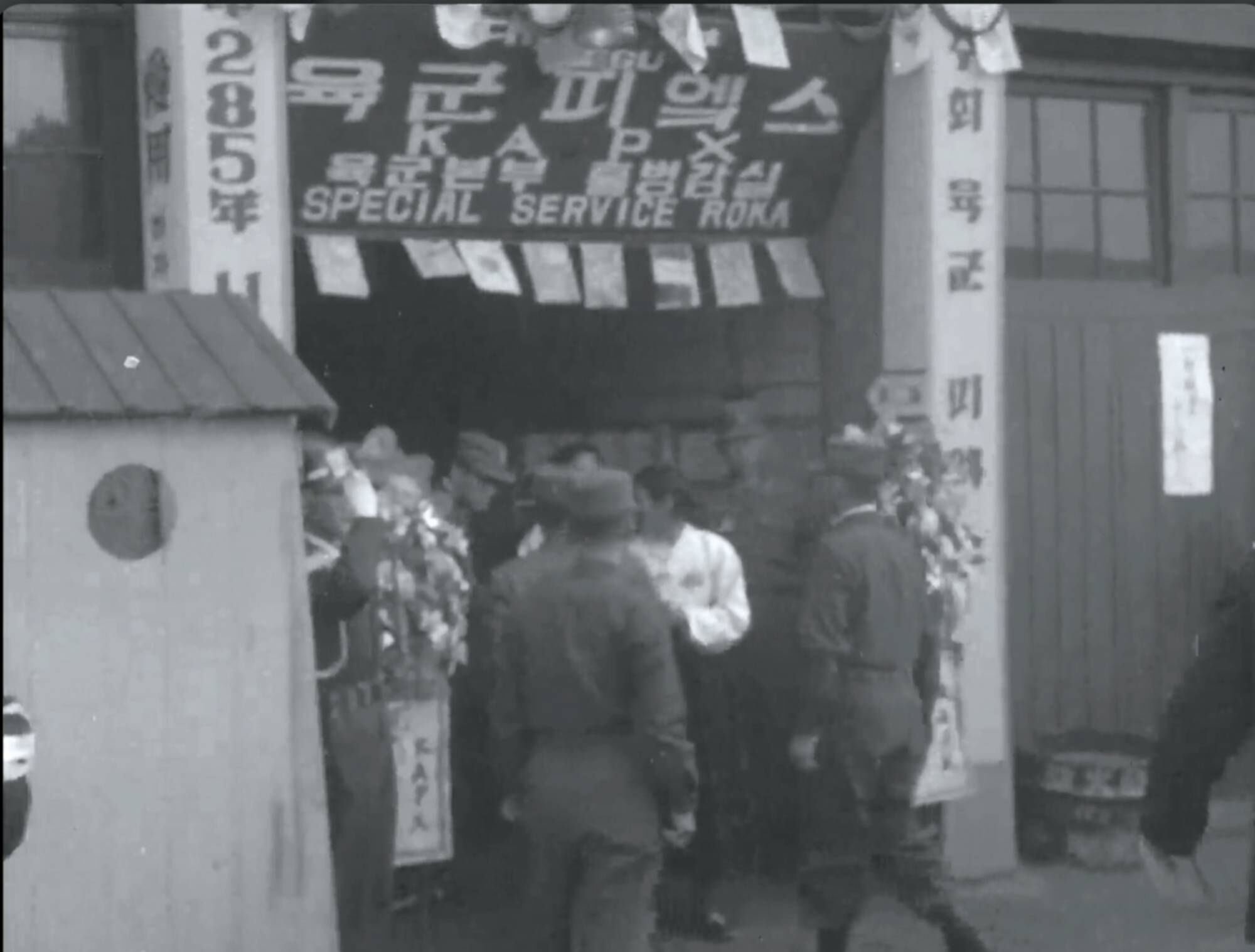
“Contemporary History in Motion,” available on the National Museum of Korean Contemporary History website, is an archive of contemporary history footage where visitors can view domestic and international documentaries on modern and contemporary history, with annotations jointly prepared by the museum and the Korean Broadcasting System (KBS). The archive was established in 2023 and has previously released 813 videos from the early 1900s through the 1970s. On September 26, an additional 295 videos were released on topics including the establishment of the Republic of Korea government, the First Republic and the April 19 Revolution, the Korean War, the May 16 military coup and the Third Republic, and daily life and culture. High-quality original footage that is difficult to find domestically is provided with annotations, including materials from British Pathé (newsreel company) and Reuters (news agency), Jeonjin Daehan News, produced by the Republic of Korea Public Information Office, and Liberty News materials from the U.S. Information Service in Korea.



National Museum of Korean Contemporary History Newsletter 2025 Spring (Vol. 76) / ISSN 2384-230X
198 Sejong-daero, Jongro-gu, Seoul, 03141, Republic of Korea / 82-2-3703-9200 / www.much.go.kr
Copyright. National Museum of Korean Contemporary History all rights reserved.